
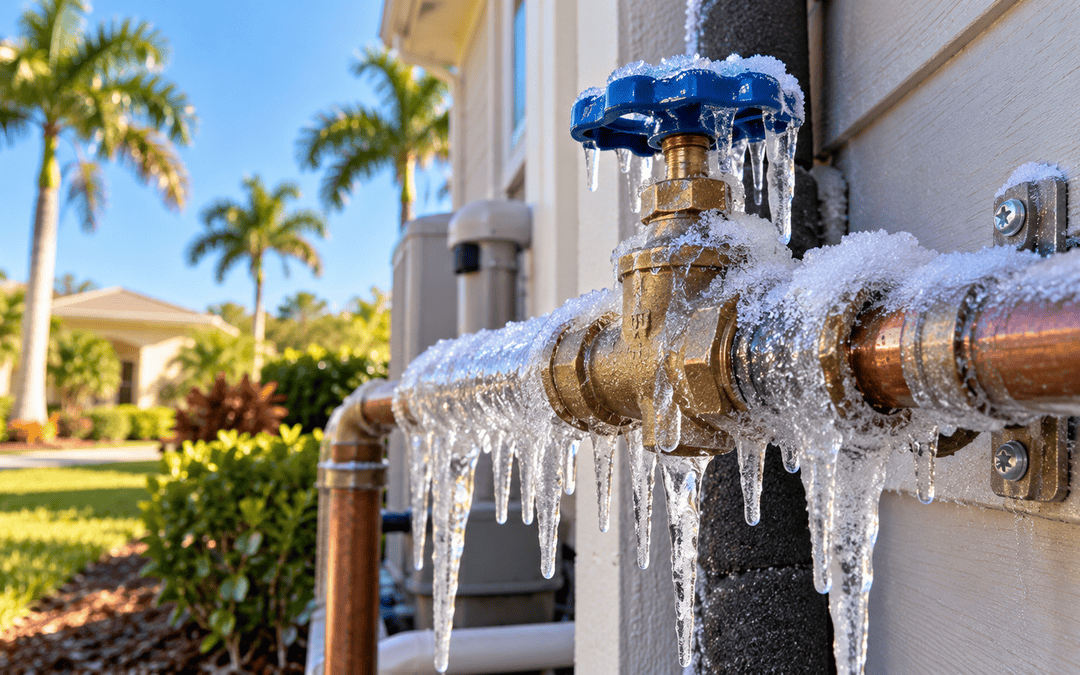
Most winters in Jacksonville pass without drama, usually bringing just a few cool weeks or a frost advisory that clears by noon. Then a hard freeze rolls in from the northwest, temperatures drop into the mid-20s overnight, and by 6 a.m. you are standing at the kitchen sink turning the handle only to find there is no trickle, no pressure, and just silence. It’s a stressful discovery.
That scenario plays out more often than most Northeast Florida homeowners expect, and the homes here are structurally unprepared for it. A typical Orange Park or Middleburg house sits on a slab-on-grade foundation with water lines running through uninsulated block walls, shallow crawlspaces, or unheated garages, none of which offer meaningful protection during a sustained freeze. Northern homes are built to hold heat in; Florida homes are built to shed it, and that difference matters enormously when temperatures drop. They aren’t built for cold.
If you are reading this because your water just stopped running, or because the forecast is showing 28°F tonight, your local neighbors at Lance Maxwell Plumbing have navigated this exact situation with hundreds of families across Clay County and Duval County. We want to help you understand what is happening inside your pipes, what to do right now, and when to stop improvising and call for help.
Understanding What Happens When the Pipes Freeze in a Florida Home
Water freezes at 32°F, but uninsulated pipes in unconditioned spaces can hit that threshold well before outdoor temperatures officially cross it, especially when wind chill accelerates convective heat loss through exterior walls. According to the U.S. Department of Energy Insulation Guide, water pipes are highly vulnerable to freezing and bursting when exposed to temperatures below the freezing point, particularly when located outside a building’s thermal boundary or in unconditioned spaces.
The thermal boundary in a residential structure separates conditioned space from unconditioned areas like attics, garages, and crawlspaces, as detailed in the U.S. Department of Energy Building America Publication. In a Florida home, it frequently does not, and the builder never planned for it to need to. It’s a major vulnerability.
Uninsulated pipes lose heat rapidly through conduction to the surrounding cold air, which causes the water inside to freeze, expand, and ultimately burst the pipe, as noted in the U.S. Department of Energy Insulation Guide. That expansion is where the real damage happens, because a standard copper or PVC line has no capacity to absorb that kind of extreme pressure. The pipe simply splits.
Florida homes carry vulnerabilities that northern homes do not: exposed outdoor pool equipment lines, uninsulated garage utility setups, and supply lines running along exterior stucco walls with no thermal buffer. In older Green Cove Springs or Fleming Island homes with raised foundations, shallow crawlspace plumbing is particularly exposed. A single night in the mid-20s, the kind of cold that visits Clay County maybe once a decade, is enough to split a line.
Immediate Frozen Pipe Emergency Steps to Take Right Now
If you have turned on a faucet and gotten nothing, or you can see frost on an exposed pipe under the kitchen sink or along the garage wall, work through these steps before anything else.
Open the affected faucet first. As the frozen section begins to thaw, water and steam need somewhere to go: a closed faucet traps that pressure and raises the risk of a burst. Keep it open throughout the entire thawing process.
Next, try to locate where the freeze is. In a Northeast Florida home, the most common culprits are pipes along exterior block walls, the main supply line entering through the garage, outdoor hose bibs, and pool equipment lines. Frost on the pipe surface or a section that feels unusually rigid are clear signs.
If you suspect the pipe has already split, or if you cannot find the frozen section, shut off the water main immediately. In Florida, the main shut-off valve is typically near the street curb in a plastic utility box, or close to the front outdoor hose bib, not in a basement, because we do not have those here. Every adult in the household should know where that valve is before a freeze arrives, not during one.
- Keep faucets dripping: A trickle of cold water from faucets served by exposed pipes keeps water moving and relieves internal pressure.
- Open cabinet doors: Warm indoor air circulating around plumbing under kitchen and bathroom sinks can slow or prevent a freeze from taking hold.
- Locate your water main shut-off valve: Confirm it’s near the street curb or front hose bib, and make sure every family member knows how to operate it.
- Do not use open flames: Blowtorches, propane heaters, or lighters near a frozen pipe create a severe fire hazard and can damage surrounding fixtures and materials.
- Call for backup: If you cannot locate the frozen section or suspect a split has already occurred, contact a professional rather than waiting.
Facing an active plumbing emergency or a burst pipe in the middle of a hard freeze? Don’t worry, we have seen this before. Your neighbors at Lance Maxwell Plumbing offer 24/7 emergency availability to keep Orange Park and Jacksonville families safe. Call us right now at (904) 209-9103, and we will handle the rest.
How to Thaw Frozen Pipes Safely Without Damaging Your Home
The U.S. Department of Energy Cold Climate Guide is clear on this: attempting to heat frozen pipes using improper methods can lead to severe safety hazards. How you thaw them matters just as much as how fast you do it.
A portable hair dryer on a low setting is one of the most reliable tools available. Move it back and forth along the frozen section, starting closest to the faucet and working toward the coldest point. Never operate electrical equipment while standing in standing water, a precaution that becomes critical if the pipe has already cracked and begins releasing water as it thaws.
The warm towel method is a sound alternative when electrical equipment is not safe to use nearby. Soak towels in hot water, wring them out, and wrap them around the frozen section, replacing them every few minutes as they cool. It takes longer, but it will not shock the pipe with a sudden temperature swing.
Pouring boiling water directly onto a frozen pipe, using any open flame, or applying unmonitored heat sources are all approaches that can rupture a pipe that otherwise would have survived the freeze. PVC and copper both react poorly to rapid thermal changes. Take your time.
Waiting for outdoor temperatures to climb and letting the pipe thaw on its own is riskier than it sounds. If the expanding ice has already cracked the pipe wall, a natural thaw produces unmonitored flooding inside your walls or crawlspace, sometimes for hours before a pressure drop or damp drywall makes it visible. Staying present during thawing is what lets you catch a failure before it becomes a water damage claim.
Once the immediate situation is under control, pipe insulation is the most cost-effective preparation for the next cold snap. Per the U.S. Department of Energy Insulation Guide, insulating plumbing pipes reduces heat loss during water circulation, prevents pipes from sweating, and protects them from freezing. For a clear look at what that preparation involves, our guide on how to protect pipes from freezing covers the specific steps worth taking before winter arrives.
Air sealing is equally important and often skipped. Don’t skip it. Air leaks carry cold air directly into building cavities, and that moving air can freeze pipes even when they are surrounded by fiberglass or cellulose: insulation materials that lose most of their thermal resistance when air flows through them, according to the U.S. Department of Energy Insulation Guide. In Northeast Florida homes, the gaps most worth sealing are around outdoor hose bibs, dryer vent penetrations, and cable or conduit entries through exterior walls. During a hard freeze with sustained wind, those small openings become direct cold-air pathways to interior plumbing.
Want to make sure your home is fully protected before the next hard freeze hits? Schedule professional plumbing service with your neighbors at Lance Maxwell Plumbing. Our licensed master plumbers can inspect your lines, add professional insulation, and seal vulnerable entry points. Contact us today at (904) 209-9103 to schedule your service.
What to Do If a Pipe Bursts in Freezing Weather
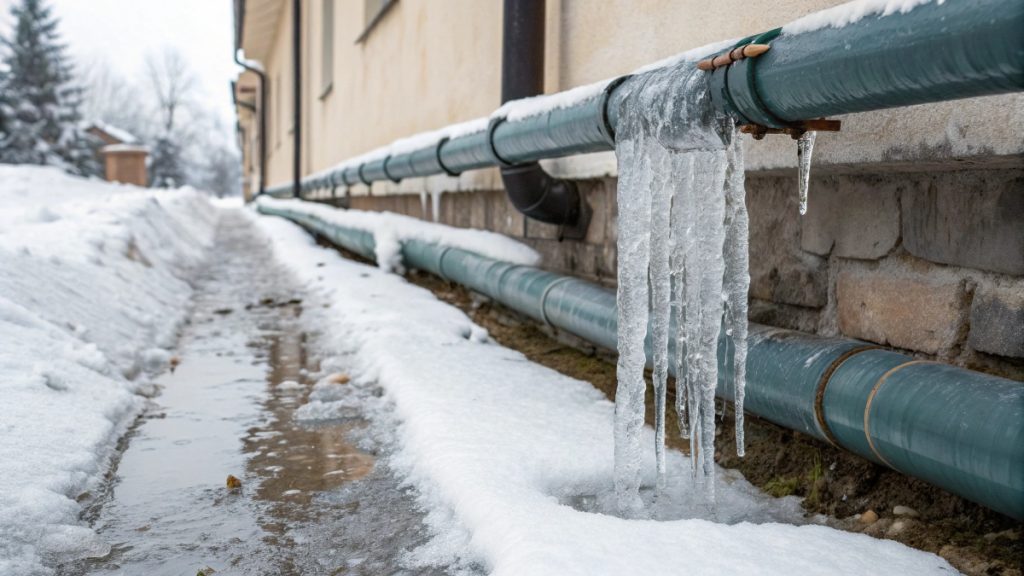
A burst pipe during a hard freeze is a different situation from a frozen one: the damage is already in motion, and the priority shifts entirely to limiting it.
Shut off the water main immediately. Every minute that valve stays open, more water is moving into your home. The shut-off location in a Florida property is typically at the street curb in a plastic utility box, or near the front exterior wall. If you have never located yours before, now is the moment to find it.
Once the water is off, open the lowest faucets in the house to drain whatever remains in the system, reducing the volume that will continue seeping out as the ice finishes thawing. Take photos of visible damage before moving anything: insurance documentation goes more smoothly when you capture the initial state. It helps with claims.
Begin removing standing water and wet materials as quickly as possible. Florida’s high humidity means mold can establish itself in wet drywall or insulation within 24 to 48 hours, well before a repair crew can address the underlying pipe.
A burst pipe can fail silently in a hidden unconditioned space, such as an attic above a second-floor bathroom, or a shallow crawlspace under an older Orange Park home with a raised foundation. Watch for a sudden unexplained drop in water pressure, damp or discolored drywall that appeared overnight, or the sound of running water when every faucet in the house is closed.
Knowing when to call an emergency plumber is genuinely important in these moments. If water is actively spraying, if the freeze is behind a wall or ceiling, or if you cannot safely access the affected section, stop and call. Attempting to open walls or navigate tight crawlspaces without proper equipment during a freeze-and-thaw cycle adds risk without improving the outcome.
Older Jacksonville and Orange Park homes with raised foundations carry a specific structural concern worth understanding. Running plumbing through cantilevered floors or vented crawlspaces is generally not recommended due to the risk of freezing, per the U.S. Department of Energy Insulation Guide. For homes where that plumbing is already in place, insulating all pipes in vented crawlspaces is the baseline recommendation, and heat tape can be applied as an additional measure if insulation alone proves insufficient, according to the U.S. Department of Energy Cold Climate Guide. Whether heat tape is appropriate depends on the specific configuration: a licensed plumber should evaluate those setups before the next cold season, not during one.
Frequently Asked Questions About Frozen Pipes in Florida
Do you let hot or cold water drip to keep pipes from freezing?
Let cold water drip from the faucet farthest from the water source. Keeping water moving helps prevent freezing, but the more important function is pressure relief: if a freeze does occur, the open faucet gives the expanding water somewhere to go, which is what prevents the pipe from bursting.
What can I pour down the drain to unfreeze pipes?
Nothing should go into a frozen pipe. Boiling water, salt, or chemical drain treatments create sudden temperature shocks that can crack PVC or split copper fittings. The only safe approach is applying low, controlled external heat, such as a hair dryer or warm towels, to the outside of the pipe.
Do frozen pipes eventually thaw out?
They will thaw as outdoor temperatures rise, but just waiting is a gamble. If the freeze has already cracked the pipe wall, the thaw turns a frozen pipe into an active leak that may run for hours inside a wall or crawlspace before you notice it. Monitoring the pipe during thawing is what separates a manageable repair from a significant water damage claim.
What do plumbers use to unfreeze pipes?
Professional plumbers typically use pipe thawing machines, controlled heat guns, or infrared heaters, tools that deliver precise, targeted heat without the fire risk of open flames or the thermal shock of boiling water. The safety margin over DIY methods is substantial, particularly when the frozen section is behind a wall or in a confined crawlspace.
Can pipes still freeze if water is turned off?
Yes. Residual water left in the lines after shutoff can freeze and expand just as readily as flowing water. If you shut off the main valve ahead of a hard freeze, open your faucets and let the system drain until they run dry, which removes the water that would otherwise sit in the pipes overnight.
Contact Us Today
Dealing with frozen or burst pipes is stressful under any circumstances, and it is worse when it happens at 6 a.m. on a January morning in Orange Park with temperatures still falling. Taking quick, deliberate action, such as opening the faucet, locating the freeze, and shutting off the main when needed, can mean the difference between a minor inconvenience and a major water damage claim. For more ways to safeguard your home’s plumbing system throughout the year, explore our plumbing maintenance tips. Keeping Orange Park neighbors safe since the ’90s, Lance Maxwell Plumbing has been helping families in Orange Park, Jacksonville, Middleburg, and Green Cove Springs keep their homes safe, comfortable, and dry, including through the cold snaps that catch this part of Florida off guard every few years.
Don’t let a sudden freeze catch you off guard. Whether you need immediate emergency help with a burst pipe or want to reinforce your home’s plumbing before the next cold snap, your neighbors at Lance Maxwell Plumbing are here day or night. Call us today at (904) 209-9103 to schedule an inspection or emergency service, and let our licensed master plumbers handle the rest.