Lift Station Repair & Maintenance in Jacksonville, Clay & St. Johns Counties
When wastewater can’t flow downhill to the sewer by gravity, a lift station pumps it there. As long as it’s working, nobody thinks about it. When it fails, sewage backs up into drains or overflows from the basin, and it can affect an entire home, building, or community at once. Lance Maxwell Plumbing repairs and maintains lift stations for homeowners, HOAs, apartment communities, and businesses across Jacksonville, Orange Park, and the rest of Clay, Duval, and St. Johns counties. We’ve been a locally owned plumbing company here since 1994.
Request lift station service. If your alarm is sounding or wastewater is backing up, contact us right away for 24/7 emergency service.
What Is a Lift Station?
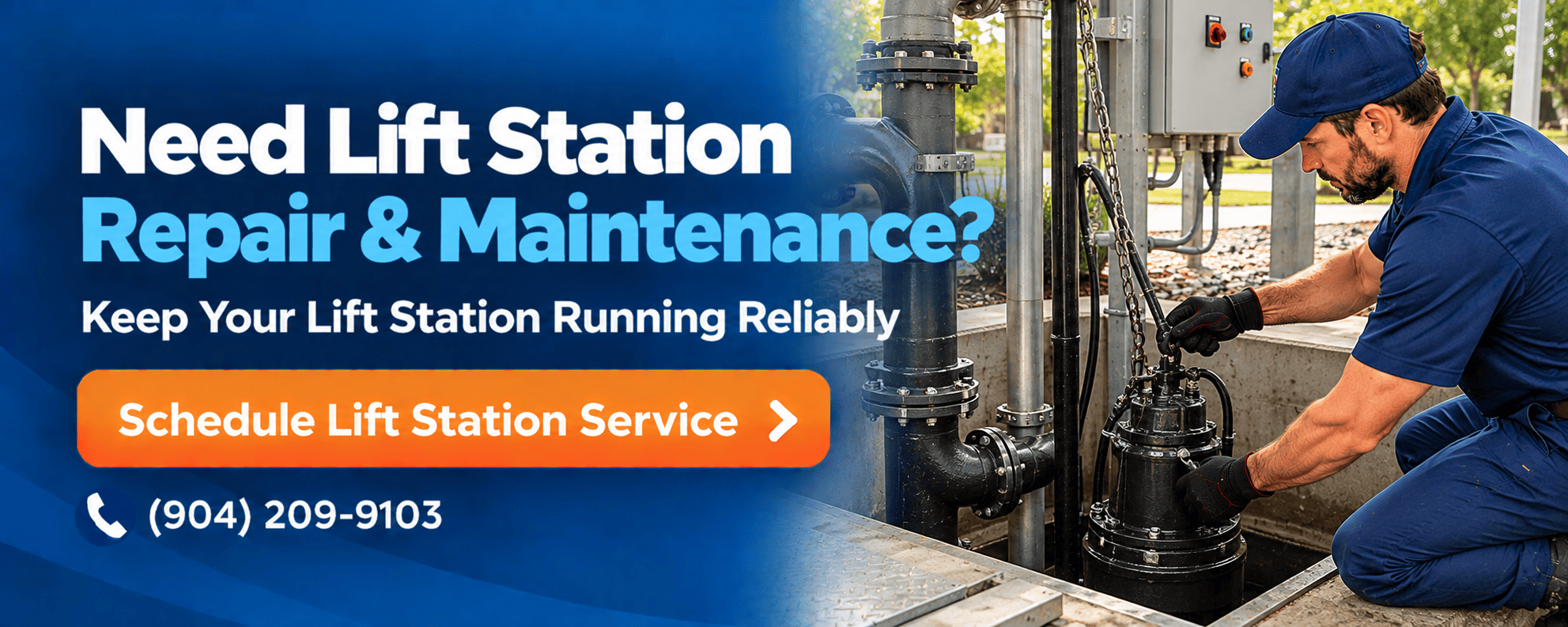
A lift station is a pumping system that moves wastewater from a lower elevation up to a sewer main or another point where it can continue by gravity. They’re common on low-lying residential lots, waterfront properties, apartment and condo communities, and commercial sites. A typical lift station includes:
- A collection basin, or wet well
- One or more sewage pumps
- Float switches or level sensors
- An electrical control panel
- Check valves and discharge piping
- A high-water alarm
Wastewater fills the basin until a float or sensor turns the pump on. The pump pushes the wastewater out through the discharge line, and shuts off once the level drops.
Signs Your Lift Station Needs Repair
- The high-water alarm is sounding
- Wastewater is backing up into drains or toilets
- The pump runs nonstop, or won’t turn on at all
- Grinding, humming, or vibrating sounds from the station
- Strong sewage odors around the station
- The circuit breaker for the pump keeps tripping
- Slow drains throughout the property
Silencing an alarm stops the noise, not the problem. If the pump isn’t running, the basin keeps filling, and you can run out of capacity quickly.
Common Lift Station Problems We Repair
Pump Failure
The pump does the heavy lifting. Wear and age, motor or electrical failures, overheating, damaged impellers, and debris jammed in the pump can all stop it. A pump that runs constantly is just as concerning as one that won’t start. It can mean a bad level control, a pump that can’t keep up, or a stuck check valve.
Float Switch and Level Control Problems
Floats and level sensors tell the pump when to turn on and off. When they stick, tangle, get coated in grease, or fail electrically, the pump runs at the wrong times or not at all. It’s one of the most common causes of lift station backups, and often one of the simpler fixes.
Clogs and Blockages
Wipes, grease, rags, and debris that should never go down a drain end up in the basin, pump, check valve, or discharge line. Clogs reduce pumping capacity, strain the equipment, and eventually cause backups. When the problem extends into the drain lines, our hydro jetting and sewer line services can clear the system upstream and downstream.
Electrical and Control Panel Issues
Tripped breakers, failed contactors, and faulty alarms can take a station offline even when the pump itself is fine. We troubleshoot the controls to find where the failure actually is before replacing parts.
Residential Lift Stations
Some homes sit too low to drain to the sewer by gravity, so a lift station handles every toilet, sink, shower, and washer in the house. Homeowners rarely think about it until it fails. Periodic inspection catches worn pumps, damaged floats, and developing clogs before they cause a backup inside the home.
Commercial, HOA & Multifamily Lift Stations
A lift station serving an apartment community, condo association, office building, restaurant, or retail center may handle wastewater for dozens or hundreds of people. When it fails, the impact spreads across every unit, tenant, or customer it serves. We work with property managers, HOA boards, and facility teams to diagnose problems quickly and keep systems running. Learn more about our commercial plumbing services for property managers and businesses.
Lift Station Maintenance
Routine maintenance is the best way to avoid finding a failed pump on a holiday weekend. Depending on the station’s size and usage, maintenance may include checking:
- Pump operation and amperage
- Float switches and level controls
- Alarm function
- Electrical connections and the control panel
- Check valves and discharge piping
- Grease and debris buildup in the basin
High-use commercial and multifamily stations typically need more frequent attention than residential systems.
Why Choose Lance Maxwell Plumbing for Lift Stations?
- Locally owned since 1994. More than 30 years serving Orange Park, Jacksonville, and Clay County.
- Best of Clay winner four years running, 2021 through 2024.
- 24/7 emergency service for alarms and backups.
- Full plumbing support, from the station to the drain and sewer lines that feed it.
- Residential and commercial lift station service.
Lift Station Service Across Clay, Duval & St. Johns Counties
We repair and maintain lift stations throughout Clay County, including Orange Park, Fleming Island, Middleburg, and Green Cove Springs; Duval County, including Jacksonville; and St. Johns County, including Julington Creek.
Lift Station FAQs
What happens when a lift station fails?
Wastewater keeps flowing into the basin but isn’t pumped out, so it eventually backs up through drains or overflows from the station. Fast service limits the damage and the cleanup.
What should I do if my lift station alarm goes off?
Reduce water use right away: hold off on flushing, showers, laundry, and dishwashers. Then call for service. The alarm means the water level is higher than it should be.
Can a bad float switch cause a backup?
Yes. If the float doesn’t trigger the pump, the basin keeps filling until it backs up. Float problems are one of the most common causes of lift station failures.
How often should a lift station be maintained?
It depends on the system’s size and how much wastewater it handles. Busy commercial and multifamily stations benefit from more frequent inspection than lightly used residential systems.
Can a clogged lift station be fixed without replacing the pump?
Often, yes. If debris or grease is the cause and the pump isn’t damaged, clearing the blockage can restore normal operation. We inspect the system before recommending replacement.
Schedule Lift Station Service
Keep your wastewater moving. Contact us to schedule lift station repair or maintenance in Jacksonville, Orange Park, or anywhere in Clay, Duval, and St. Johns counties.
What Plumbing Help Do You Need?
- Backflow Testing
- Commercial Plumbing Services for Property Managers & Businesses
- Drain Cleaning
- Emergency Services
- Faucet & Fixture Repair, Replacement & Installation
- Gas Piping
- Hot Water Heaters
- Hydro Jetting & Drain Jetting Services
- Lift Station Repair & Maintenance
- Plumbing Installation
- Plumbing Repairs
- Professional Leak Detection Services
- Sewer and Water Line Repair
- Slab Leaks
- Tankless Water Heater Installation & Repair
- Whole-House Repiping