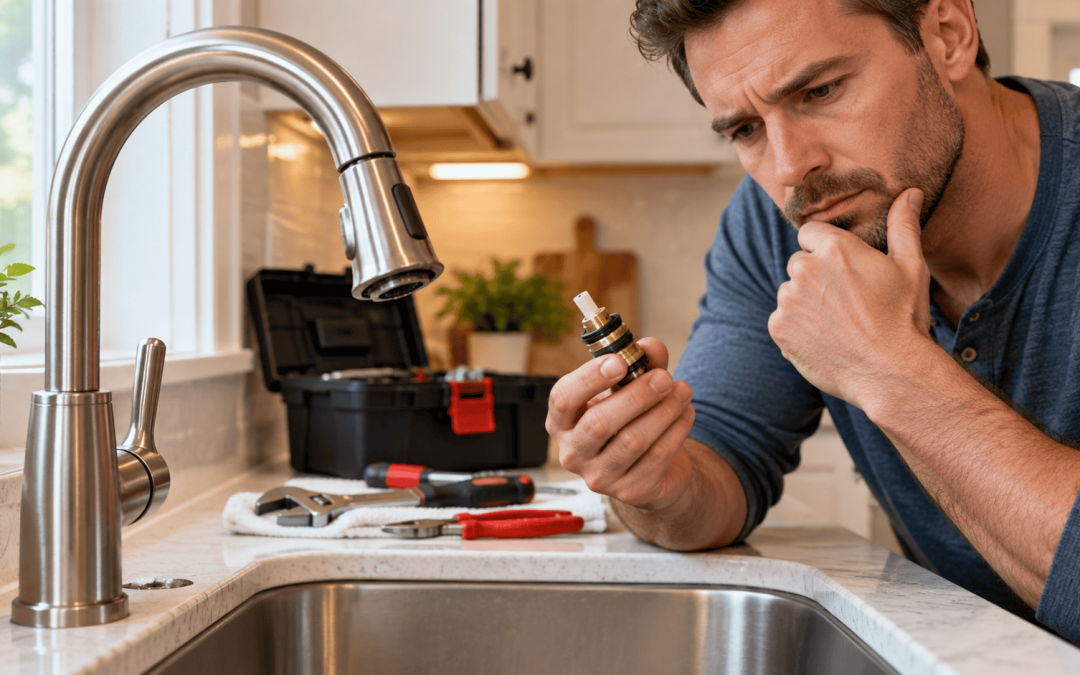
A dripping faucet is easy to dismiss as a weekend chore. But that steady drip carries a real cost. Drips add up fast. According to the EPA WaterSense Fix a Leak Week program, a single faucet dripping once per second can waste more than 3,000 gallons of water per year, and that waste shows up on your utility bill every month, not just once. The harder question isn’t whether to fix it. Knowing when to call a plumber for a faucet versus when you can handle it yourself is where most homeowners get tripped up. There’s a tipping point where a routine maintenance task crosses into territory that can threaten your home’s structure, void your insurance coverage, and put you on the wrong side of local building codes. Understanding where that line sits is worth more than any tutorial you’ll find online.
The Real Risks of DIY Faucet Repairs
The assumption that DIY is always the cheaper route rarely holds up when something goes sideways. Small mistakes cost big. A homeowner who grabs a wrench and starts working through connections without fully understanding the system can easily over-torque a supply line fitting, split a plastic compression sleeve, or crack the threaded collar on a shutoff valve. Think of a home’s water supply system as a tightly coiled spring behind every fixture: constant pressure, held in check by a series of fittings and seals. One misapplied force, and that pressure finds a new path: through a cabinet wall, into the subfloor, or behind drywall where it can sit undetected for weeks before the damage becomes visible.
The common DIY plumbing mistakes to avoid extend well beyond over-tightening. Using the wrong thread sealant on a compression fitting, skipping the step of shutting off the main water valve before disassembly, or installing a replacement cartridge that looks close enough but isn’t manufacturer-specified: these are the errors that produce hidden leaks rather than obvious floods. A slow seep behind a cabinet is far more damaging than a visible drip, because it quietly rots the wood substrate and, in Florida’s humid climate, creates ideal conditions for toxic mold growth inside walls. Before attempting any repair beyond the most basic maintenance, reviewing a solid faucet repair guide can help you understand exactly what you’re getting into before you disassemble anything.
How to Evaluate Your Faucet Leak Severity
Not every faucet problem carries the same stakes, and a quick visual inspection can tell you a great deal before you touch a single fitting. Check the supply lines for mineral staining or moisture around the connections, look at the shutoff valves for corrosion or calcification, and run the faucet while watching the drain connections below for any dripping. A clogged aerator causing reduced flow is a completely different situation than water pooling under the sink after you run the tap. If anything you observe matches the signs of a plumbing emergency, stop and call a professional before touching anything further.
It’s also worth acknowledging that plumbing work involves confined spaces, awkward body positions, and tools that can cause real injury. The construction and specialty trade sector, which includes licensed plumbers, recorded a total injury and illness rate of 2.2 per 100 full-time workers in 2024, according to the U.S. Bureau of Labor Statistics specialty trade contractors data. That figure reflects trained professionals working in controlled conditions. The physical risk of plumbing work doesn’t diminish because the job is in your own home. Don’t take chances.
Signs You Need to Call a Professional Immediately:
- Water pooling under the cabinet: This indicates a supply line leak or a failed connection, which can quickly ruin cabinetry and subfloors.
- Persistent low water pressure: If cleaning the aerator doesn’t resolve it, the issue likely originates deeper in your home’s piping or at the main water supply, not at the fixture itself.
- Corroded or frozen shut-off valves: If you cannot turn off the water under the sink without forcing the valve, do not force it. A corroded valve that snaps under pressure causes immediate flooding.
- Screeching or banging noises: Known as water hammer, these sounds point to high pressure or loose pipes that require professional calibration, not a tighter wrench.
If you’re seeing any of these warning signs, the safest next step is a professional diagnostic. Lance Maxwell Plumbing serves Orange Park, Jacksonville, Key West, Middleburg, Clay County, and Duval County, and is available day or night at (904) 209-9103 for urgent plumbing issues. Their Orange Park plumbing services cover everything from a quick assessment to full fixture repair, so you’re not left guessing about what’s happening inside your walls.
When You Can Safely DIY Your Faucet Fix
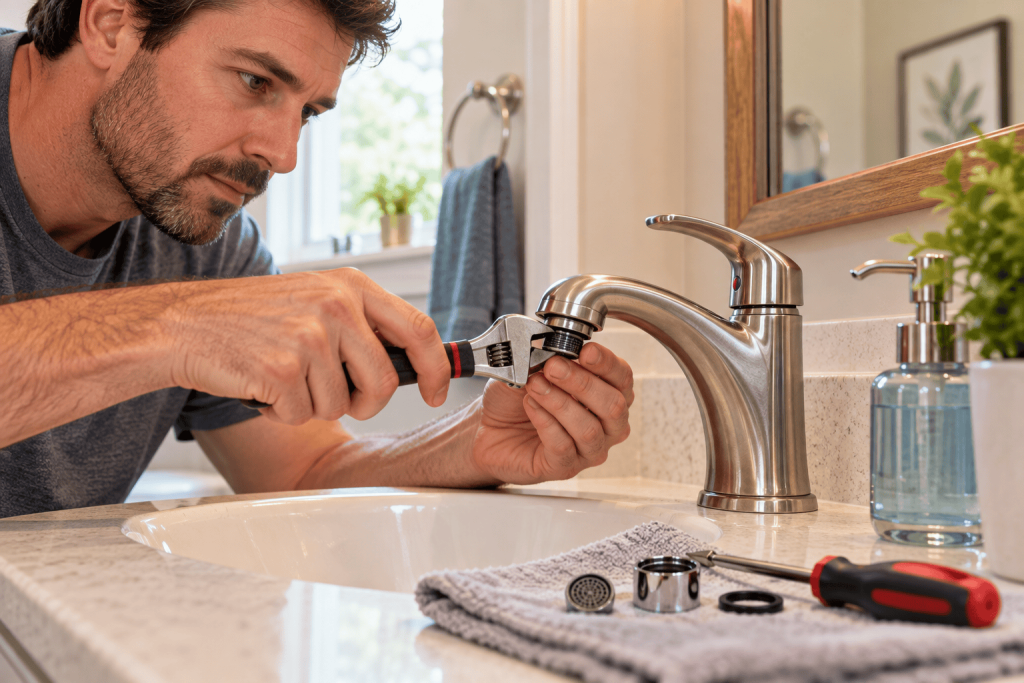
There’s a significant category of faucet maintenance that genuinely belongs in the homeowner’s hands. Cleaning mineral buildup from an aerator, for example, requires nothing more than unscrewing the tip of the faucet, rinsing the screen under running water, and soaking it in white vinegar if the calcification is stubborn. It’s the plumbing equivalent of cleaning the lint trap on a dryer: routine, low-risk, and something worth doing periodically regardless of whether anything seems wrong. Replacing a pull-out sprayer hose on a kitchen faucet falls into the same category, provided you’re using a manufacturer-approved replacement part and not disturbing the supply connections underneath.
The question of tools is where many homeowners misjudge the scope of a repair. A basic aerator cleaning requires nothing beyond your hands and maybe a cloth for grip. Once you move into cartridge replacement or valve seat work, though, you’re looking at specialized tools like basin wrenches and cartridge pullers that most households don’t own. Most people lack these. Purchasing those tools for a single repair can easily cost more than a service call, and improvising with a substitute often causes the damage you were trying to prevent. If you’re weighing whether to buy the equipment or hire out, the detailed breakdown on how to repair a dripping faucet covers exactly which tools needed for faucet repair are genuinely necessary for each type of fix, making it easier to assess whether the job is within scope before you commit to anything.
Low-Risk DIY Faucet Tasks:
- Cleaning or replacing the aerator: Unscrew the tip of the faucet to rinse out sediment or limescale buildup, with no tools required beyond hand strength and a cloth.
- Replacing the decorative handle: Swapping out a worn handle or knob for aesthetic purposes, without disturbing the valve stem beneath.
- Replacing a pull-out sprayer hose: Threading a new manufacturer-approved hose through the spout assembly using the existing connections.
- Tightening a loose mounting nut under the sink, provided the area is dry, accessible, and the nut turns freely without resistance.
When to Call a Professional for Faucet Replacement
At some point, the math on repairing an aging faucet stops making sense. Repairs only go so far. When internal corrosion has compromised the valve body, when repeated cartridge replacements haven’t stopped the dripping, or when a fixture has worn down after a decade or more of daily use, replacement is the more cost-effective path. The labor cost of diagnosing and patching a failing old fixture can approach or exceed the cost of a clean swap to a new one, and the new fixture carries a manufacturer warranty that the patched-up old one never will. There’s also the compounding factor: an old fixture that’s been repaired multiple times often has other components nearing failure, so you’re not just fixing today’s problem; you’re deferring tomorrow’s. If you’re at that decision point, the walkthrough on replacing a kitchen faucet covers what the process involves, which helps clarify whether it’s a job you want to take on yourself or hand off to a licensed plumber.
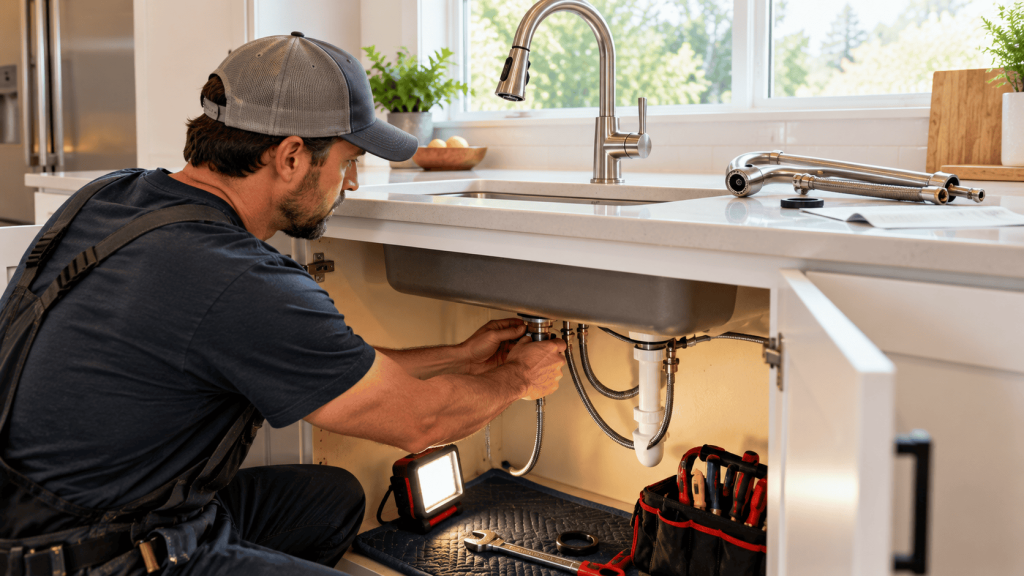
Lance Maxwell Plumbing works with top-tier fixture brands, including Moen, Kohler, Delta, and Toto, to ensure every new installation meets the highest standards for fit, finish, and long-term performance. Beyond faucets, their team handles the full range of home plumbing upgrades, including water heater installation services to keep plenty of hot water on tap, so a single call can address multiple systems in your home at once rather than scheduling separate visits.
The Legal and Financial Protections of Professional Plumbing
Florida’s licensing framework for plumbing contractors exists for reasons that go well beyond paperwork, and the requirements are rigorous enough that they function as a meaningful consumer protection layer. Rules keep you safe.
Why Professional Licensure Matters in Florida:
- Strict State Standards: To legally operate as a Certified Plumbing Contractor in Florida, an individual must pass a state certification examination and demonstrate four years of experience or an approved combination of college education and experience, as verified by Florida’s plumbing contractor licensing requirements.
- Financial Accountability: Florida licensure applicants must submit personal and business credit reports, including a FICO-derived credit score, to verify financial stability and responsibility before they can serve the public.
- Consumer Safety: Applicants must undergo a fingerprint-based criminal background check processed through a Livescan Service Provider registered with the Florida Department of Law Enforcement (FDLE).
- Insurance Protection: Certified contractors are required to carry public liability and property damage insurance, as well as workers’ compensation coverage, which shields homeowners from liability if an accident occurs on their property during a service call.
- Beyond leak and fixture work, a licensed plumber can address the full drainage system, including professional drain cleaning, to ensure nothing upstream is quietly contributing to the problem at the faucet.
Residential plumbing connects directly to the public water supply, which means improper modifications carry consequences that extend beyond your own property line. Florida’s Department of Health manages environmental public health programs that include monitoring water quality and issuing boil water notices when contamination risks emerge, as detailed by the Florida Department of Health. Backflow prevention devices and proper cross-connection controls are part of every compliant installation, and a DIY repair that accidentally bypasses or damages those components can create a public health issue, not just a household inconvenience. There’s also the insurance dimension to consider: many insurance providers may deny claims for water damage if the work was performed by an unlicensed individual, which means a repair that appeared to save money upfront can result in an uncovered loss that costs substantially more.
Frequently Asked Questions About Faucet Repairs
How much should a plumber charge to replace a faucet?
The cost to replace a faucet typically ranges from $150 to $350 for labor, depending on the complexity of the installation and local service rates. That figure doesn’t include the cost of the fixture itself, so budget for the faucet separately when planning the job. Pricing will also vary based on whether the existing shutoff valves need replacement or if the supply lines require modification.
What is the average lifespan of a faucet?
On average, a high-quality faucet lasts between 15 to 20 years, though cheaper models may begin to fail or leak after 10 years. Local water hardness is a significant factor: homes with hard water see mineral buildup accelerate wear on internal seals and cartridges, which can shorten that window considerably. If your faucet is approaching or past the 10-year mark and showing persistent issues, replacement often makes more financial sense than continued repair.
How long should it take a plumber to install a new faucet?
A standard faucet installation typically takes between one and two hours, provided the existing plumbing is compatible and the work area is accessible. Complications like corroded shutoff valves, non-standard supply line configurations, or unusually tight cabinet spaces can extend that timeline. A plumber who rushes through the job to hit a one-hour window isn’t necessarily doing you a favor.
Can a handyman install a new faucet?
A qualified handyman is often fully capable of installing a new faucet when the job involves simple replacement rather than new line installations or complex pipe modifications. For guaranteed compliance with local building codes, though, a licensed plumber is the more defensible choice, particularly in Florida, where the licensing standards for plumbing contractors require verified experience, financial vetting, and background checks before anyone can legally perform the work.
How often should bathroom faucets be replaced?
Bathroom faucets should be replaced when they develop persistent leaks, mineral buildup that restricts water flow, or physical damage that can’t be repaired, generally every 10 to 15 years. If you’re unsure whether your fixture has reached that point, a professional inspection can give you a clear answer without committing to a full replacement upfront.
Contact Us Today
Minor maintenance like cleaning an aerator or swapping a sprayer hose is well within reach for most homeowners. Once you’re dealing with supply line connections, corroded shutoff valves, or a leak that keeps returning after a repair, the situation calls for a different approach. A licensed professional doesn’t just address the immediate problem: they assess what caused it, check the surrounding connections, and ensure the repair meets code. Before making a final call on your situation, it’s worth taking a few minutes to perform a basic leak test to get a clearer picture of what you’re actually dealing with.
Your neighbors at Lance Maxwell have been serving Orange Park and Jacksonville families since the ’90s, bringing honest, expert service to every job. That reputation shows up in the experiences customers describe. Rick Creel shared this after having master plumber Ethan Woodard come out to his property: “Had Ethan Woodard come out to my property today to service some basic plumbing repairs, and he taught me how to fix the issues myself in the future, as well as not overcharging me for additional stuff that I didn’t need. Great service; will use again. That kind of honesty, teaching a customer what they need to know and not padding the invoice, reflects how Lance Maxwell Plumbing approaches every call.”
When you’re ready to schedule a diagnostic or need urgent help, contact Lance Maxwell Plumbing or call (904) 209-9103. The team is available day or night to keep your home’s plumbing running safely. We can help.