
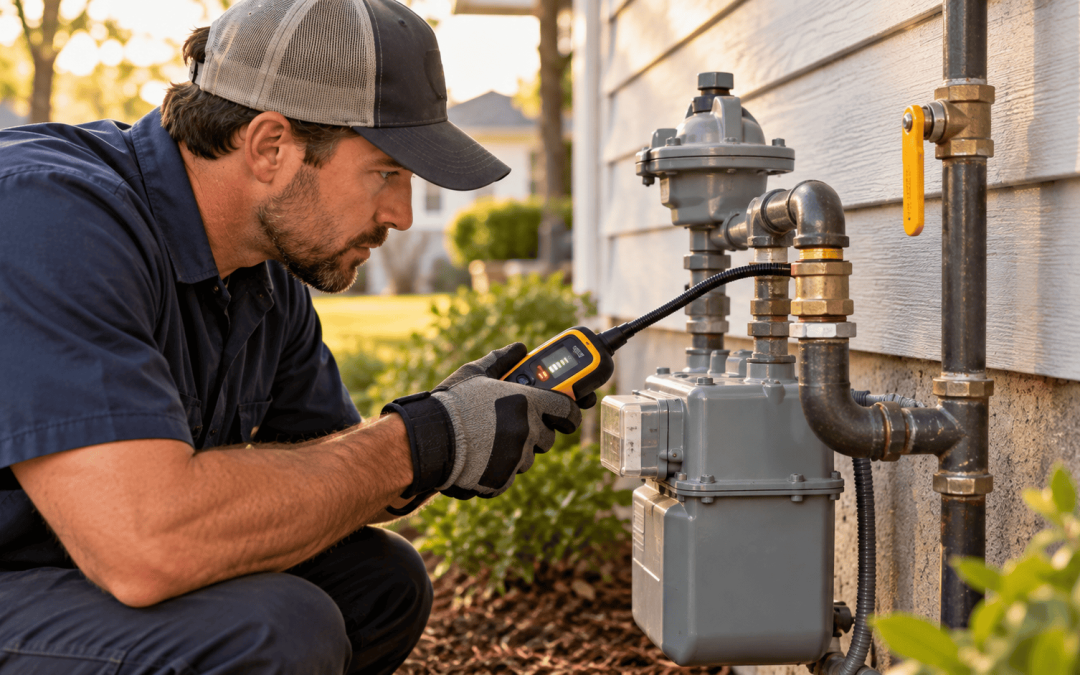
A natural gas leak in your home is an immediate safety hazard that requires quick, decisive action. Knowing how to recognize the sensory signs of a leak through smell, sound, and sight can help you protect your family and get everyone to safety before a crisis occurs.
The Three Sensory Signs of a Natural Gas Leak
Natural gas in its raw form is completely colorless and odorless. Utility companies add a chemical called mercaptan, a sulfur-based compound, specifically so that leaks become detectable by smell. That’s the rotten egg or sulfur odor you may have heard described. It is sharp, unpleasant, and deliberately hard to ignore. Do not ignore it. If you catch even a faint whiff of it near an appliance, a gas line, or anywhere in your home, treat it as an active leak until proven otherwise.
One critical challenge worth knowing: prolonged exposure to low-level gas odors can cause what’s called olfactory fatigue, where your nose essentially stops registering the smell. A leak that has been slowly seeping for hours may no longer be obvious to someone who has been in the room the whole time. A visitor walking in from outside will notice it immediately, while the person who has been sitting at the kitchen table for two hours may not. That difference is dangerous, and it is one reason a faint smell that comes and goes should never be dismissed as probably nothing. The Colorado Springs Utilities Safety Guide frames this through a simple three-part sensory check of sight, sound, and smell that covers the full range of detectable indicators.
Beyond smell, a hissing or whistling sound near a gas line, appliance connection, or meter is a direct auditory signal that gas is escaping under pressure. On the visual side, a white cloud, mist, or fog near a gas line, particularly outdoors, can indicate a significant release.
Gas line problems share an important characteristic with other hidden home hazards: they often develop quietly, with no dramatic warning until the situation becomes serious. The signs of a slab leak follow the same pattern of slow, concealed damage that compounds over time before it becomes impossible to ignore. In both cases, catching it early is the difference between a quick repair call and a major disaster. If something seems slightly off, such as a smell that doesn’t quite fit, a sound you can’t place, or a gas meter that seems to be running when all appliances are off, that instinct deserves attention.
Physical Symptoms of Gas Exposure and Carbon Monoxide
When natural gas leaks into an enclosed space, it crowds out oxygen. In a well-sealed room, even a modest leak can reduce oxygen concentration enough to cause physical symptoms before the smell becomes overwhelming. This is especially true in newer, tightly insulated homes where air exchange is limited. Pets are often the first to show signs because they are lower to the ground, breathe faster, and have no way to communicate what they are experiencing beyond obvious behavioral changes like lethargy or disorientation.
Carbon monoxide adds a separate and more dangerous layer of risk. Unlike natural gas, carbon monoxide produces no odor at all. It is generated by incomplete combustion, such as a gas appliance that is malfunctioning, a furnace with a cracked heat exchanger, or a water heater venting improperly. You cannot smell it, taste it, or see it. The only reliable detection method is a functioning CO detector. Act fast. If multiple people in the household develop the same unexplained symptoms simultaneously, particularly if those symptoms ease when everyone steps outside, that pattern points to either a gas leak or carbon monoxide exposure, and the response is the same: evacuate immediately.
Watch for these physical warning signs:
- Unexplained headaches, dizziness, or lightheadedness
- Nausea, breathing difficulties, or sudden fatigue
- Flu-like symptoms that disappear when leaving the house
- Irritability or lethargy in pets
- Nosebleeds or eye and throat irritation
If you or anyone in your household is experiencing any of these symptoms right now, leave the building immediately: do not stop to grab belongings. Once you are outside and well away from the structure, call 911 or your gas utility from a safe distance. After emergency services have cleared the property and secured the gas supply, an emergency plumber in Orange Park can locate the breach, perform pressure testing on your lines, make the necessary repairs, and safely relight your appliances so you can get things flowing smoothly again.
Outdoor and Environmental Indicators of a Gas Leak
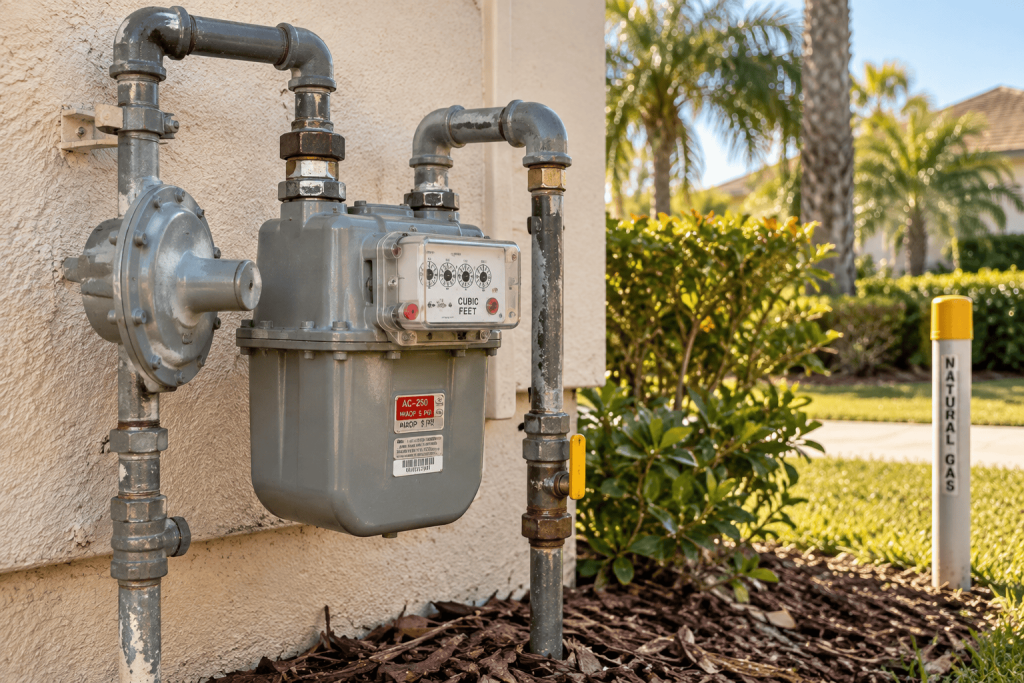
Underground gas lines are at risk from a range of physical forces that have nothing to do with the age of your appliances or how often you use them. Soil movement, corrosion along the pipe exterior, and tree root intrusion can all compromise buried lines without any visible surface disturbance, at least initially. In the sandy soils common throughout Northeast Florida, underground leaks tend to migrate to the surface more quickly than they would in denser, clay-heavy ground, because gas moves through loose, granular material with less resistance. That can work in a homeowner’s favor, since surface indicators appear sooner, but it also means the leak has a wider dispersal area by the time it is noticed.
Duval and Clay County homeowners face an additional variable that most of the country does not: hurricane season. Tropical storms and significant flooding events shift sandy soil, sometimes dramatically, and that movement puts mechanical stress on outdoor gas meters and the buried lines connected to them. A storm that deposits several inches of rain in a few hours can erode soil around a meter connection or cause subtle pipe displacement along a buried run. After any major storm, and not just the ones that make the news, it is worth walking your yard and visually inspecting your outdoor meter connections and any areas where you know gas lines are buried. Check your yard.
Key outdoor environmental indicators of a gas leak include:
- Dead or dying vegetation: Patches of dead grass or plants in an otherwise healthy yard, particularly in a linear pattern directly over a buried gas line, are a reliable indicator of a subsurface leak.
- Bubbling water: Bubbles rising through puddles, saturated soil, or standing water after a storm, especially near a utility easement, suggest gas is escaping and percolating upward.
- Blowing dirt: Soil or dust being pushed upward from a dry patch of ground with no surface wind is a strong visual signal of pressurized gas escaping from below.
- Hissing sounds: A distinct hissing or whistling sound coming from the ground near a utility easement, even without any visible surface disturbance.
Safety Notice: Before digging anywhere on your property, even for a small landscaping project, call 811 to have underground utilities marked. In Florida’s sandy soils, gas lines can sit surprisingly close to the surface, and a shovel strike on a pressurized line is one of the most common causes of serious pipeline incidents. Digging without utility marking puts your household and your neighbors at immediate risk.
Crucial Do’s and Don’ts During a Suspected Gas Leak
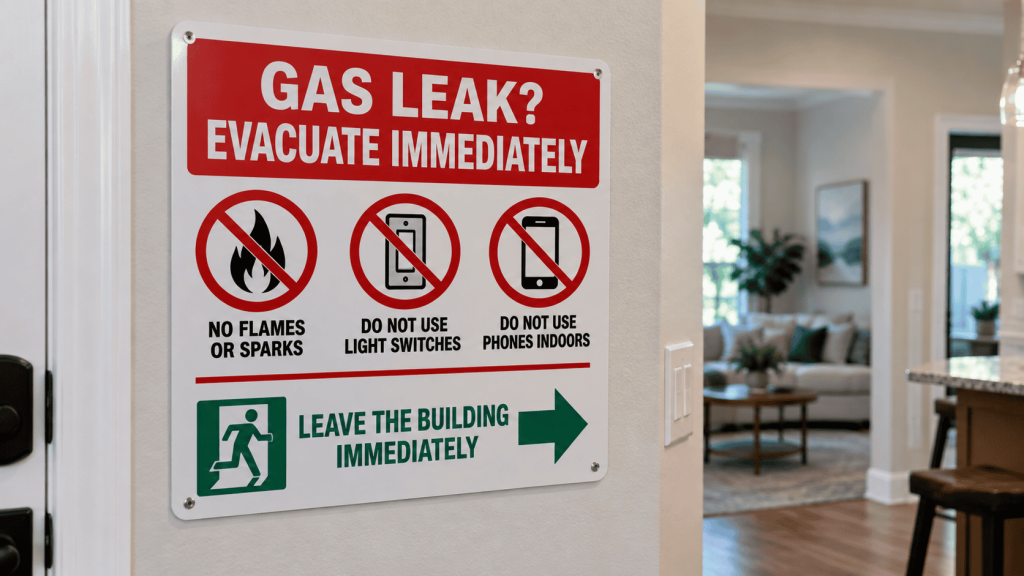
Natural gas ignites within a specific concentration range in air, and the threshold for ignition is lower than most people assume. An open flame is not the only hazard; any tiny electrical arc can trigger ignition. Common household actions can trigger ignition:
- Flipping a light switch creates a tiny spark inside the switch housing.
- Unplugging an appliance creates a micro-arc at the outlet.
- A ringing landline phone can generate enough electrical activity to trigger ignition if gas concentration is already elevated. Many homeowners consistently overlook how simple actions, like static electricity or operating common appliances, can act as ignition risks during a suspected leak.
This is why the behavioral rules during a suspected leak are so strict. You are not overreacting by leaving your phone on the counter and walking out. You are not being dramatic by refusing to stop and turn off the stove. The window between elevated gas concentration and ignition-level gas concentration can close faster than it takes to make a decision, and the consequences of getting that wrong are severe. Do not risk it.
For homeowners who do not have an active emergency but know their gas connections have not been inspected in years, particularly older flexible brass connectors, which have a known history of cracking and corrosion, scheduling a professional gas line installation or safety inspection is an easy way to address risk before it becomes a crisis. Outdated connectors and aging appliance connections are among the most common sources of slow residential leaks.
Step-by-Step Emergency Response Protocol
When you suspect a gas leak, the order of your actions matters as much as the actions themselves. Moving through these steps in order gives you the best chance of getting everyone out safely without inadvertently creating an ignition source.
- Evacuate immediately: Get every person and pet out of the structure without stopping to collect belongings.
- Leave doors open: As you exit, leave interior and exterior doors open to allow natural ventilation and reduce gas concentration inside.
- Do not touch electronics: Do not flip light switches, unplug appliances, use landline phones, or operate any electrical device inside the home.
- Do not start vehicles: Avoid starting cars or activating garage door openers near the structure, as both can generate electrical arcs.
- Call from a safe distance: Once you are well away from the property, across the street or further, call 911 or your local natural gas utility.
- Wait for clearance: Do not re-enter the home under any circumstances until emergency officials have inspected the property and declared it safe.
Once emergency services or the utility company responds, they will typically shut off the gas supply at the main meter. What surprises many homeowners is what happens next: the utility’s responsibility ends at the meter. That is your job. Everything downstream, including the gas piping inside your home, the connections to your appliances, and the flexible connectors behind your range and water heater, is the homeowner’s responsibility to repair and certify before the gas can be restored. Washington Gas Safety Education outlines how utility leak classifications define this boundary, distinguishing between the utility’s service line and the customer-owned piping that begins at the meter. A friendly master plumber performs the pressure testing on that customer-side piping, locates the exact point of failure, makes the repair, and safely relights each appliance before the home is occupied again.
Homeowners in Orange Park and Jacksonville who have been through this process often say the most disorienting part is not the emergency itself: it is the gap between the moment the utility turned off the gas and when they can actually use their home again. A dependable neighbor and qualified gas line plumber is the one who closes that gap.
Frequently Asked Questions About Gas Leak Detection
How can I test for a gas leak myself?
If you suspect a very minor leak at a specific connection point, and the odor is faint enough that you feel safe remaining in the area, you can perform a simple bubble test. Mix a few drops of dish soap into water, then brush or spray the solution onto the gas line joints, valves, or fittings you want to check. Growing bubbles at any point indicate escaping gas. This test is only appropriate for minor suspected leaks at known connection points. If the odor is strong, if you can hear hissing, or if you feel any physical symptoms, skip the test entirely and evacuate immediately.
Can you stay in a house with a gas leak?
No. Natural gas is highly combustible, and even a modest concentration in an enclosed space creates both explosion risk and oxygen displacement. There is no safe threshold at which it becomes acceptable to remain inside. Evacuate immediately, leave the doors open as you go, and call emergency services from outside the home.
How long can a gas leak go unnoticed?
A slow leak behind walls, in a crawl space, or in a poorly ventilated area can go undetected for weeks or months. Because the mercaptan odor dissipates or becomes masked over time, and because olfactory fatigue can reduce your sensitivity to it, small, consistent leaks sometimes only become apparent when a visitor notices the smell or when occupants begin experiencing unexplained headaches and fatigue. This is one of the strongest arguments for having working gas detectors installed alongside CO detectors in any home with gas appliances.
What does a gas leak smell like?
The mercaptan added to natural gas produces a smell that most people describe as rotten eggs, sulfur, or the sharp odor of a skunk. It is deliberately pungent and unpleasant. If you detect this scent near any gas appliance, connection, or line, even faintly, treat it as an active leak. Do not attempt to locate the source yourself if the smell is strong.
What are the first physical signs of gas exposure?
The earliest symptoms tend to be neurological: sudden, unexplained headaches, dizziness, and a general sense of lightheadedness. Nausea and eye or throat irritation often follow. A key diagnostic clue is that these symptoms improve noticeably when you step outside into fresh air. If multiple people in the household experience the same symptoms at the same time, that’s a strong signal to evacuate and call for help rather than wait to see if it passes on its own.
Reach Out to Us Today
Gas line safety is not a topic that rewards carelessness, but it also is not one that should leave you paralyzed with anxiety. The warning signs, including the smell, the sound, and the environmental clues, are detectable if you know what to look for, and the response protocol is simple once you know the steps. Homeowners across Orange Park, Jacksonville, Middleburg, and Fleming Island have trusted your local neighbors at Lance Maxwell since the early 1990s to handle exactly these situations: the pressure testing, the repairs, the appliance relighting, and the honest conversation about what failed and how to prevent a recurrence. We have been keeping our Orange Park neighbors safe since the ’90s, and we know how to take the sting out of stressful plumbing emergencies. Gas line work demands a friendly master plumber who understands the local conditions, such as the sandy soils, the storm exposure, and the older housing stock, that put Northeast Florida gas lines at specific risk.
When you need immediate repairs or a preventative safety inspection, contact Lance Maxwell Plumbing for upfront pricing, no surprise fees, and 24/7 on-call availability. Give us a ring at (904) 209-9103.