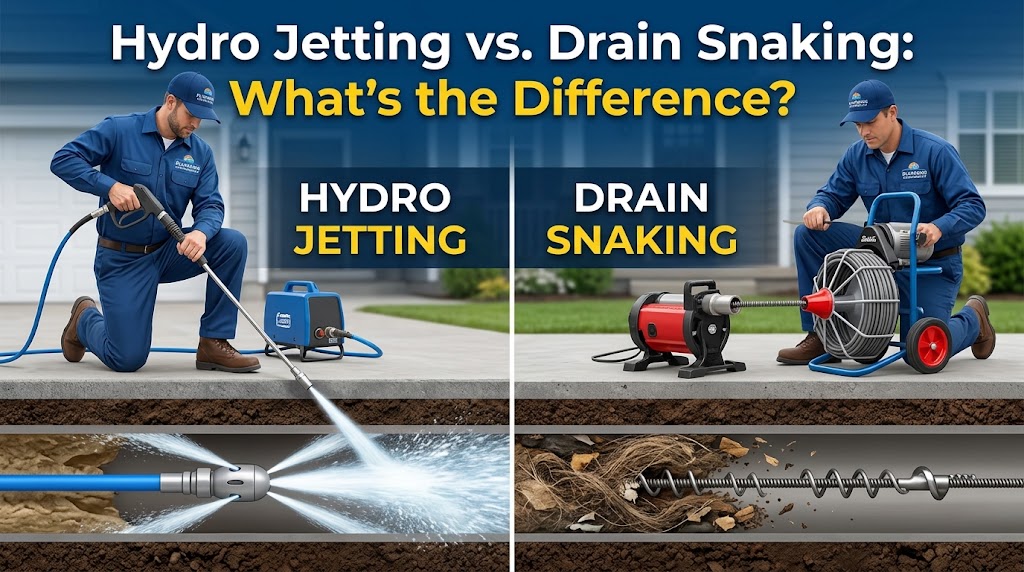
When a drain starts slowing down or stops flowing altogether, the first question is usually simple: how do you get it open again? The answer depends largely on what is causing the blockage and how much buildup is inside the pipe. In the hydro jetting vs. snaking comparison, drain snaking is generally the simpler option for breaking through isolated clogs, while hydro jetting provides a more thorough cleaning for grease, heavy buildup, recurring blockages, and certain types of root intrusion. Both methods have their place, and choosing the right one can mean the difference between temporarily opening a drain and addressing the underlying problem more completely.
If you are dealing with a stubborn plumbing issue, understanding what each service does can help you know what to expect when your plumber arrives. Here is a closer look at drain snaking, hydro jetting, their costs, their ideal applications, and how a professional plumber determines which approach makes the most sense.
What Is Drain Snaking?
Drain snaking is one of the most familiar methods used to clear clogged plumbing lines. A plumber inserts a long, flexible cable into the drain and feeds it through the pipe. Depending on the equipment being used, the cable may have a cutting head, auger, or other attachment designed to break through or retrieve the obstruction.
As the cable moves through the plumbing line, it can punch a path through materials such as hair, soap residue, food debris, and other localized blockages. Once the clog is broken apart or removed, water can begin flowing through the pipe again.
Drain snaking is often a good choice for straightforward clogs because it is relatively quick, effective, and less involved than more aggressive drain-cleaning methods.
Common situations where a drain snake may be sufficient include:
- A bathroom sink clogged with hair and soap residue
- A shower or bathtub that is draining slowly
- A kitchen drain with a relatively minor obstruction
- A toilet line with a localized blockage
- A drain that has clogged for the first time
- A blockage caused by an object that can be broken apart or retrieved
Snaking is especially useful when the problem is concentrated in one section of the drain rather than caused by buildup throughout a large portion of the pipe.
What Is Hydro Jetting?
Hydro jetting uses highly pressurized water to clean the inside of plumbing pipes. Instead of simply pushing through a blockage, hydro jetting is designed to remove materials that have accumulated along the pipe walls.
During the service, a plumber inserts a specialized hose and nozzle into the plumbing line. The equipment directs powerful streams of water through the pipe, loosening and flushing away grease, sludge, mineral deposits, debris, and other buildup.
Think of drain snaking as creating a path through a mess, while hydro jetting is closer to cleaning the entire hallway. Both can restore flow, but they accomplish the job differently.
Because hydro jetting cleans a larger portion of the interior pipe surface, it is often recommended when clogs repeatedly return or when buildup has become extensive.
Hydro Jetting vs. Drain Snaking at a Glance
| Feature | Drain Snaking | Hydro Jetting |
| Primary purpose | Breaks through or removes a clog | Cleans buildup from inside pipe walls |
| Best for | Simple, localized blockages | Heavy buildup and recurring clogs |
| Hair and soap clogs | Very effective | Effective, but may be more service than necessary |
| Grease buildup | May open a pathway | Excellent for removing accumulated grease |
| Root intrusion | Can cut through some roots | Can remove smaller root growth after proper inspection |
| Recurring clogs | May provide temporary relief | Often better for addressing widespread buildup |
| Pipe cleaning | Limited | Thorough |
| Service complexity | Generally simpler | Requires specialized equipment and evaluation |
| Typical cost | Usually lower | Usually higher |
| Preventive maintenance | Limited | Can be useful in appropriate plumbing systems |
When Is Drain Snaking Enough?
Not every clog requires hydro jetting. In many situations, traditional drain snaking is exactly what the plumbing system needs.
If a drain suddenly stops working because of a relatively small obstruction, a snake can often clear the problem without the need for more extensive cleaning.
For example, imagine a bathroom sink that has gradually started draining more slowly over the past few weeks. Hair, toothpaste, soap, and other debris may have formed a blockage near the drain opening. A professional drain snake may be able to break through that material quickly and restore normal drainage.
Snaking may also make sense when:
- The clog is isolated to one fixture.
- There is no history of repeated blockages.
- The pipe does not appear to contain extensive grease or sludge.
- The obstruction is relatively close to the fixture.
- The problem involves an object that needs to be retrieved or broken apart.
In these cases, using hydro jetting could be unnecessary. A good plumber is not looking to use the biggest piece of equipment simply because it is available. The goal is to use the method that appropriately addresses the problem.
When Is Hydro Jetting Needed?
Hydro jetting becomes particularly valuable when a plumbing line has more than a simple clog.
Some drain problems develop because the diameter of the pipe has gradually become smaller as grease, sludge, soap, mineral deposits, and other materials collect along its interior walls. A drain snake might punch through enough buildup to restore flow, but the remaining material can quickly collect additional debris.
That is one reason some clogs seem determined to make a comeback.
Hydro jetting may be recommended when you are dealing with:
Recurring Drain Clogs
If the same sink, drain, or sewer line keeps clogging even after it has been snaked, there may be significant buildup inside the pipe.
Snaking can create an opening through the obstruction, but it does not necessarily clean material from the full circumference of the pipe. Hydro jetting can remove more of the buildup responsible for repeated problems.
A recurring clog should also be professionally evaluated because persistent drainage issues can sometimes indicate pipe damage, root intrusion, poor installation, or other plumbing problems.
Heavy Grease Buildup
Grease is one of the biggest troublemakers in kitchen drainage systems.
Cooking oils, fats, and grease may enter a drain as liquids, but they can cool and stick to the inside walls of the plumbing. Food particles and other debris then become trapped in the greasy coating.
Over time, the opening inside the pipe can become increasingly narrow.
A drain snake may cut a path through a grease blockage, but hydro jetting is usually much better suited to removing substantial grease accumulation from the pipe walls.
This is especially important in plumbing systems that experience frequent kitchen use or have a history of grease-related blockages.
Root Intrusion
Tree roots naturally seek moisture, which can make underground sewer lines attractive targets when cracks or openings are present.
Small roots can enter damaged pipe joints or openings and grow inside the sewer line. As the root mass expands, it may trap toilet paper, waste, and other debris.
Mechanical cutting equipment is often used for substantial root intrusion. Depending on the situation, hydro jetting may then help flush out smaller roots and remaining debris.
However, hydro jetting does not repair the opening that allowed the roots into the pipe. If roots have entered a sewer line, the underlying pipe condition needs to be evaluated.
Removing the roots without addressing damaged plumbing could allow the problem to return.
What Happens During Drain Snaking?
A professional drain-snaking service usually begins with an evaluation of the affected fixture and symptoms.
The plumber may ask questions such as:
- How long has the drain been clogged?
- Has the problem happened before?
- Is one fixture affected or are several drains slow?
- Are there unusual sounds or odors?
- Have you already tried any drain-cleaning methods?
Once the likely location of the obstruction has been identified, the plumber selects the appropriate drain-cleaning equipment.
The flexible snake is then introduced into the drain or a plumbing cleanout. The cable is advanced until it reaches the obstruction. Depending on the clog, the plumber may break through the material, pull it out, or cut it apart.
Afterward, the drain is tested to make sure water is flowing properly.
The process is generally straightforward, although difficult or deep blockages may require additional diagnostic work.
What Happens During Hydro Jetting?
Hydro jetting is more involved because the condition of the plumbing needs to be considered before high-pressure water is introduced.
A professional may first inspect or evaluate the drain system to determine the location and nature of the blockage. In some cases, a sewer camera inspection may be recommended. Camera inspections can help identify damaged pipes, severe root intrusion, collapsed sections, or other structural concerns.
This evaluation is important because hydro jetting is powerful. Older, weakened, or significantly damaged plumbing may require another approach.
Once the pipe is determined to be suitable for jetting, the plumber accesses the line through an appropriate cleanout or entry point. A specialized hose is inserted, and water is released through a jetting nozzle at controlled pressure.
The nozzle is designed to direct water in ways that help move debris through the plumbing system while cleaning the interior pipe surfaces.
Depending on the condition of the line, hydro jetting can remove:
- Grease
- Sludge
- Soap buildup
- Organic material
- Mineral deposits
- Food residue
- Smaller root growth
- Sediment
- Other accumulated debris
After the cleaning is complete, the plumber can verify that the line is flowing properly.
Which Service Costs More?
Hydro jetting generally costs more than standard drain snaking.
That difference makes sense when you consider the equipment, labor, and level of cleaning involved. Drain snaking focuses primarily on opening a blockage, while hydro jetting uses specialized machinery to clean the interior of the plumbing line more extensively.
The final cost of either service depends on several factors, including:
- The location of the blockage
- The severity of the clog
- The length of pipe that needs attention
- Accessibility of the plumbing system
- Whether a camera inspection is needed
- The type and condition of the pipes
- Whether roots or other difficult materials are involved
- Whether emergency or after-hours service is required
Although snaking usually has a lower upfront cost, price should not be the only factor in deciding between the two.
If a drain has been snaked repeatedly and keeps clogging because grease remains attached to the pipe walls, continuing to snake it may ultimately become more frustrating and expensive than having the line properly cleaned.
The most cost-effective option is typically the one that matches the actual cause of the problem.
Does Hydro Jetting Completely Replace Drain Snaking?
No. Hydro jetting and drain snaking are not competing methods where one has made the other obsolete.
A plumbing snake is still an extremely useful tool. For many ordinary household clogs, snaking is fast, practical, and entirely appropriate.
Hydro jetting fills a different role. It is particularly useful when the goal is not simply to penetrate a blockage but to remove extensive buildup from the inside of a plumbing line.
Professional plumbers may even use multiple techniques depending on what they find.
The important part is diagnosing the problem before choosing the solution.
How Do You Know Which Drain-Cleaning Method You Need?
The symptoms of the plumbing system can provide clues.
A single slow bathroom sink, for instance, may point toward a localized clog that can be handled with snaking.
Multiple slow drains, recurring backups, or a sewer line that has been cleared several times may suggest that something more substantial is happening.
You should consider professional evaluation if you notice:
- The same drain repeatedly clogging
- Multiple fixtures draining slowly at the same time
- Water backing up into other fixtures
- Gurgling toilets or drains
- Sewage odors
- Frequent kitchen drain problems
- Evidence of tree root intrusion
- Sewer backups
- Drain-cleaning attempts that provide only temporary improvement
These symptoms can indicate anything from buildup to a damaged sewer line. Simply attacking the clog without identifying its cause can leave you solving the same problem over and over.
Your plumbing system should not feel like it has scheduled recurring meetings with you.
Can Hydro Jetting Be Used for Preventive Maintenance?
In appropriate plumbing systems, hydro jetting may also be used as preventive maintenance.
Properties that experience significant grease, sediment, or debris buildup may benefit from periodic professional drain cleaning before the line becomes completely blocked.
Preventive jetting can be particularly valuable when a plumbing system has a known history of buildup.
However, maintenance schedules should be based on the condition and use of the plumbing system rather than an arbitrary timeline. A professional plumber can help determine whether preventive hydro jetting makes sense for your property.
Why Professional Drain Cleaning Matters
Store-bought chemicals and do-it-yourself drain tools can sometimes provide temporary relief, but they do not always address what is actually happening inside the plumbing.
Chemical drain cleaners can also be inappropriate for certain plumbing systems, particularly when used repeatedly.
A professional plumber can evaluate the symptoms, determine whether the issue is localized or widespread, assess the condition of the pipes, and choose equipment suited to the situation.
That diagnosis becomes especially important with recurring clogs.
If a drain plugs up once because someone sent too much food down the kitchen sink, the explanation may be obvious. If it blocks every few weeks despite repeated cleaning, the plumbing system is trying fairly hard to tell you something.
Frequently Asked Questions About Hydro Jetting vs. Drain Snaking
Is hydro jetting better than snaking?
Neither option is universally better. Snaking is excellent for many isolated clogs, while hydro jetting is generally better for removing extensive buildup and addressing recurring drainage problems.
How long does hydro jetting last?
The results can last a long time because hydro jetting removes buildup from pipe walls rather than simply creating a pathway through a blockage. How long the line stays clean depends on pipe condition, usage habits, grease exposure, root intrusion, and other factors.
Can hydro jetting damage pipes?
Hydro jetting should be performed only after the plumbing has been properly evaluated. Severely deteriorated, cracked, or weakened pipes may not be suitable for high-pressure cleaning. Professional assessment helps determine whether jetting is appropriate.
Can drain snaking remove grease?
A drain snake can break through a grease clog and restore water flow, but it may leave substantial grease attached to the pipe walls. Hydro jetting is typically better for thoroughly removing heavy grease buildup.
Can hydro jetting remove tree roots?
Hydro jetting can help remove smaller root growth and flush root debris from a sewer line. More substantial root intrusion may require mechanical cutting or additional repair work. The damaged section that allowed roots to enter should also be addressed.
Why does my drain keep clogging after it has been snaked?
Recurring clogs can result from remaining grease or sludge, root intrusion, damaged pipes, improper drainage, or other underlying issues. A more complete inspection may be necessary if snaking provides only temporary relief.
Is hydro jetting worth the additional cost?
For significant buildup or recurring clogs, it often can be. Hydro jetting generally costs more than snaking, but its more thorough cleaning may reduce repeated blockage problems. A plumber can determine whether the condition of your system justifies the service.
Do I need a camera inspection before hydro jetting?
Not in every situation, but a camera inspection may be recommended when the pipe condition is unknown, clogs repeatedly return, root intrusion is suspected, or structural damage could be present.
Can I hydro jet my own plumbing?
Professional hydro jetting equipment uses extremely high water pressure and requires knowledge of pipe materials, plumbing conditions, proper access points, and safe operating procedures. This is generally a job for a trained plumbing professional.
Choose the Right Drain-Cleaning Solution With Lance Maxwell Plumbing
Whether you need a straightforward drain snaking service or more thorough jetting to tackle grease, recurring clogs, root intrusion, and stubborn buildup, the first step is understanding what is happening inside your plumbing system. At Lance Maxwell Plumbing, your trusted Jacksonville plumber, we can evaluate the problem and recommend a solution suited to your pipes and the condition of your drainage system.
We bring more than 31 years of experience providing plumbing installation and repair services throughout the Jacksonville and Orange Park areas. Our full line of plumbing services ranges from new construction applications and water heater installation to preventive maintenance and professional drain services.
Our friendly and knowledgeable staff is committed to doing whatever it takes to meet the needs of every customer. Plumbing problems do not always respect normal business hours, which is why we provide on-call 24/7 availability. Day or night, you can count on the Lance Maxwell Plumbing team to help resolve your plumbing issues.
Along with our premium plumbing services, we offer a full selection of high-quality plumbing products from trusted brands such as Delta, Kohler, and Moen.
If your drains are slow, clogged, or repeatedly backing up, do not settle for guessing at the cause. Contact us today, and one of our representatives will be glad to help you determine whether drain snaking, hydro jetting, or another professional plumbing solution is right for your needs.