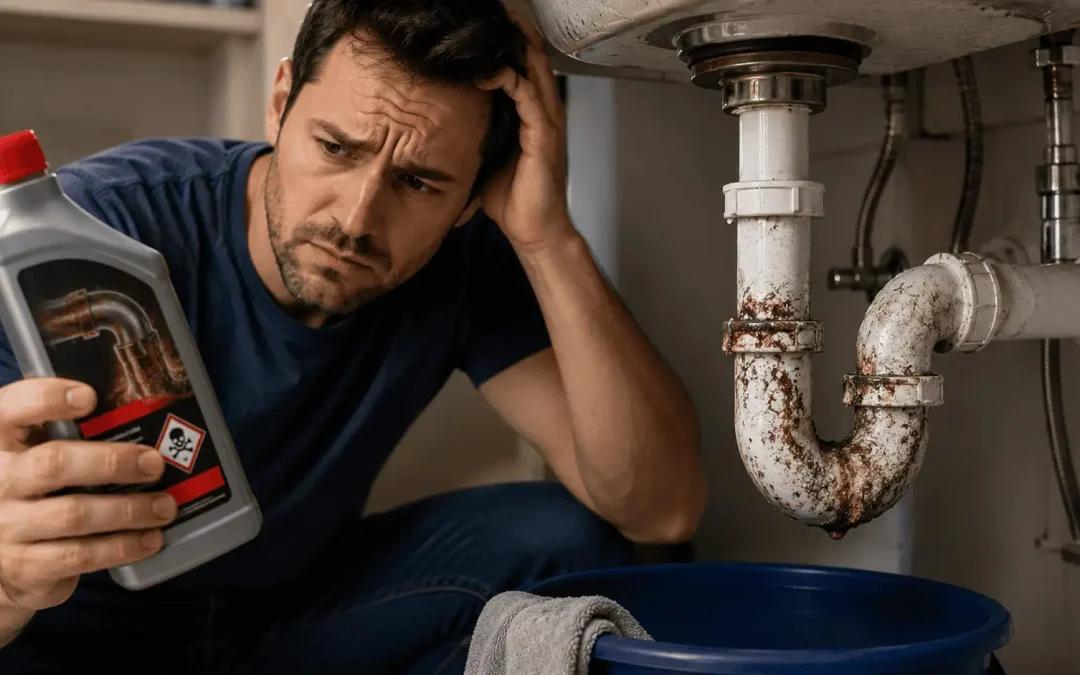
When a sink, shower, or tub starts draining slowly, it is natural to wonder: Is Drano bad for pipes, or is it a quick fix worth trying?
The honest answer is that chemical drain cleaners like Drano can sometimes clear small clogs, but they are not always the safest or best choice for your plumbing system.
While they may seem convenient, they can also create risks for certain types of pipes, older plumbing, stubborn blockages, septic systems, and even the person using them.
In many cases, the clog is only temporarily improved, not truly solved. That means the same drain can slow down again, often at the worst possible time, because plumbing problems apparently enjoy dramatic timing.
Why People Reach for Drano in the First Place
Drano and similar chemical drain cleaners are popular because they promise speed and simplicity.
You pour the product into the drain, wait, rinse with water, and hope the clog disappears. For homeowners dealing with standing water in the sink or a backed-up shower, that convenience can be very tempting.
Chemical drain cleaners are often marketed as a simple solution for common household clogs caused by soap scum, grease, hair, and organic buildup.
They are also widely available at grocery stores, hardware stores, and big-box retailers. Compared with calling a plumber, grabbing a bottle off the shelf may feel like the easier first step.
The problem is that drains are more complicated than they look from the surface.
A slow drain could be caused by a soft clog near the opening, but it could also be the result of deeper buildup, tree root intrusion, pipe corrosion, poor venting, a damaged sewer line, or a foreign object lodged in the plumbing.
Drano cannot diagnose the problem. It only reacts chemically with certain types of blockage.
If the issue is not something the product can effectively break down, the chemical may sit in the pipe longer than intended, increasing the risk of damage and safety concerns.
How Drano Works
Most chemical drain cleaners use strong ingredients designed to create heat and break down clog material.
Depending on the formula, these products may include sodium hydroxide, bleach, sodium nitrate, aluminum, or other reactive ingredients.
These chemicals can generate heat inside the drain and help dissolve organic material such as hair, grease, and soap residue.
That chemical reaction is exactly why the product can sometimes work. It is also why it can be risky.
Heat, pressure, and harsh ingredients inside a confined plumbing system can be a bad combination, especially when pipes are older, weakened, plastic, previously repaired, or already partially damaged.
If the clog does not clear, the chemicals may remain trapped behind the blockage.
That creates a hazardous situation for anyone who later attempts to plunge, snake, or disassemble the drain.
A plumber arriving after a failed chemical drain cleaner attempt may be dealing not only with a clog, but with standing water mixed with caustic chemicals.
Can Drano Damage Pipes?
Yes, Drano can damage pipes under certain conditions.
It does not automatically destroy every drain it touches, but repeated or improper use can increase the risk of plumbing problems.
The danger depends on factors like pipe material, pipe age, the severity of the clog, how much product is used, how long it sits, and whether the drain cleaner is used repeatedly.
Chemical drain cleaners can be especially concerning for older plumbing systems.
Over time, pipes may develop corrosion, weak spots, cracks, or buildup along the inner walls. Adding harsh chemicals and heat may worsen existing deterioration.
Even if the drain seems to improve temporarily, the long-term effect may not be worth it.
For plastic pipes, the risk is often related to heat. Some chemical reactions generate enough heat to soften or stress certain plastic piping materials, especially if the product sits too long.
For metal pipes, repeated exposure to caustic chemicals may contribute to corrosion.
For already compromised pipes, chemical drain cleaners can be like sending a marching band across a shaky bridge. It might hold, but you would not call it a great idea.
Why Chemical Drain Cleaners Can Make Clogs Worse
One of the biggest issues with Drano is that it may only partially clear a clog.
A drain might start moving again, but the underlying buildup remains along the pipe walls.
This can create a cycle where the homeowner uses chemical cleaners again and again, while the blockage slowly becomes more stubborn.
Grease, soap scum, hair, toothpaste, food particles, and minerals can collect in layers over time.
A chemical cleaner may burn through a narrow channel in the clog, allowing water to pass for a while. However, the remaining material can continue catching debris.
Before long, the slow drain returns.
Another problem is that chemical drain cleaners are not effective on every type of blockage.
They typically do not solve clogs caused by:
- Tree roots invading sewer lines
- Collapsed or damaged pipes
- Foreign objects stuck in the drain
- Heavy mineral scale
- Main sewer line blockages
- Poor pipe slope or installation issues
- Venting problems
When a chemical cleaner fails to clear the clog, the product may sit in the drain or pipe.
That can make the next repair step more dangerous and more complicated.
Is Drano Safe for Toilets?
In general, Drano should not be used in toilets unless the product label specifically says it is safe for that use.
Toilets are designed differently from sinks and tubs. Their trap design can cause chemical cleaners to sit in the bowl or drain passage rather than move safely through the system.
The heat generated by some drain cleaners can also potentially crack porcelain.
That is not the kind of bathroom renovation anyone has in mind.
Toilet clogs are often better handled with a flange plunger, a toilet auger, or professional plumbing service.
If a toilet backs up repeatedly, the issue may be deeper in the drain line or sewer system. In that case, chemical drain cleaner is unlikely to provide a lasting fix.
What About Septic Systems?
If your home uses a septic system, chemical drain cleaners should be used with extra caution.
Septic systems rely on beneficial bacteria to break down waste. Harsh chemicals can interfere with that natural process, especially with frequent use.
One small treatment may not destroy a septic system, but repeated chemical exposure is not ideal.
Septic-related drainage problems can also indicate issues beyond a simple clog, such as a full tank, drain field trouble, or line blockage.
Those problems need proper inspection, not guesswork from a bottle.
Health and Safety Concerns
The potential pipe damage is only part of the concern.
Chemical drain cleaners can also pose safety risks to people, pets, and surfaces in the home.
These products can burn skin, irritate eyes, release strong fumes, and react dangerously if mixed with other cleaners.
This is especially important because many people try multiple products when the first one does not work.
Mixing drain cleaners with bleach, ammonia, vinegar, or other chemicals can create toxic fumes or dangerous reactions.
Even plunging after using a chemical cleaner can splash caustic liquid back out of the drain.
For safety, never mix drain cleaning products, and never assume that “a little more” will work better.
Plumbing is not chili. Extra heat is not always the answer.
Better Alternatives to Drano
There are safer steps homeowners can try before reaching for chemical drain cleaners.
The best option depends on the type and location of the clog.
For minor clogs, consider:
- Removing visible hair or debris from the drain opening
- Using a drain snake or plastic hair removal tool
- Flushing the drain with hot water, if appropriate for the fixture and pipe type
- Cleaning the drain stopper or pop-up assembly
- Using a plunger designed for sinks, tubs, or toilets
- Scheduling preventive drain maintenance for recurring problems
For kitchen sinks, avoid pouring grease, oils, and fats down the drain.
These materials can cool and solidify inside pipes, creating sticky buildup that traps food particles.
For bathroom drains, hair catchers can help reduce clogs.
In showers and tubs, soap scum and hair are a common duo, unfortunately one that performs regularly without being invited.
When to Call a Plumber
A professional plumber should be called when a clog is recurring, severe, widespread, or connected to multiple drains.
You should also call a plumber if water backs up into another fixture, if you smell sewage, if plunging does not work, or if you suspect a main sewer line issue.
Professional plumbers have tools that do more than temporarily punch through buildup.
Depending on the situation, they may use:
- Drain snakes or augers
- Hydro jetting equipment
- Camera inspections
- Leak detection tools
- Sewer line diagnostics
- Pipe repair or replacement methods
A camera inspection can be especially useful because it allows the plumber to see what is actually happening inside the line.
Instead of guessing whether the problem is grease, roots, corrosion, or a broken pipe, they can identify the cause and recommend the right solution.
Why Professional Drain Cleaning Is Often the Smarter Choice
Professional drain cleaning is not just about removing today’s clog.
It is about protecting the plumbing system and reducing the chances of another backup.
A plumber can determine whether the issue is isolated to one fixture or connected to a larger plumbing problem. They can also avoid methods that may harm your specific pipe material.
This matters because every home is different.
A newer home in Jacksonville may have different piping than an older property in Orange Park.
Plumbing systems can vary based on age, installation quality, water quality, maintenance history, and previous repairs.
A solution that is safe for one system may not be wise for another.
Hiring a professional can also save time and stress.
Instead of repeatedly buying chemical cleaners, waiting, rinsing, plunging, and hoping, you get a direct evaluation and a better chance at a lasting repair.
Hope is nice, but it is not a plumbing strategy.
Is Drano Ever Okay to Use?
There may be situations where a chemical drain cleaner clears a small clog without causing immediate problems.
However, it should not be treated as a routine maintenance product or a first choice for recurring clogs.
Always read and follow the product label, use proper ventilation, wear protection, and avoid using it in fixtures or plumbing systems where it is not recommended.
If the drain is completely blocked, if water is standing and not moving, or if you have already tried a chemical cleaner once without success, it is better to stop and call a plumber.
Using more product can increase the risk without improving the outcome.
How to Prevent Drain Clogs
Preventive maintenance is one of the best ways to avoid emergency drain problems.
While no plumbing system is completely clog-proof, small habits can make a big difference.
To help protect your drains:
- Use drain screens in showers, tubs, and bathroom sinks
- Keep grease, coffee grounds, and food scraps out of kitchen drains
- Run plenty of water when using the garbage disposal
- Avoid flushing wipes, paper towels, cotton swabs, or feminine hygiene products
- Clean sink stoppers regularly
- Schedule professional maintenance if drains slow down repeatedly
- Address minor drain issues before they become major backups
A little prevention can help you avoid major inconvenience, water damage, and emergency repairs.
It can also help your plumbing system work more efficiently over time.
FAQ
Is Drano bad for pipes?
Drano can be bad for pipes, especially with repeated use, older plumbing, plastic pipes exposed to heat, or clogs that do not clear quickly. It may also worsen safety risks if chemicals remain trapped behind a blockage.
Can I use Drano in a completely clogged drain?
It is not recommended. If the drain is fully blocked, the chemical may sit in the pipe and fail to clear the clog. This can increase the risk of pipe damage and chemical exposure.
Is Drano safe for PVC pipes?
Some products claim to be safe for certain plastic pipes when used exactly as directed, but heat and repeated chemical exposure can still create risks. If you have recurring clogs, call a plumber instead of relying on repeated chemical treatments.
Can Drano damage old pipes?
Yes. Older pipes may already have corrosion, cracks, buildup, or weak areas. Harsh chemicals can make existing problems worse.
What should I do if Drano does not work?
Do not keep adding more product. Avoid mixing chemicals or plunging aggressively if caustic liquid is still present. Contact a professional plumber for safe drain cleaning.
Is it okay to use Drano in a toilet?
Most standard chemical drain cleaners should not be used in toilets unless the label specifically states they are designed for toilet use. A plunger, toilet auger, or plumber is usually a safer choice.
What is the safest way to clear a drain?
For minor clogs, try removing debris, cleaning the stopper, using a plunger, or using a drain snake. For recurring or stubborn clogs, professional drain cleaning is the safest and most effective option.
How often can I use chemical drain cleaner?
Chemical drain cleaner should not be used for regular maintenance. Frequent use can increase the risk of pipe damage and may hide a deeper plumbing issue.
Call Lance Maxwell Plumbing, Your Trusted Jacksonville Plumber
If you are dealing with a slow drain, stubborn clog, or plumbing problem that keeps coming back, do not let harsh chemicals make the situation worse.
Turn to us at Lance Maxwell Plumbing, your trusted Jacksonville plumber, for dependable plumbing installation, repair, and maintenance services.
With more than 31 years of experience serving the Jacksonville and Orange Park areas, we provide a full line of plumbing solutions, from new construction applications and water heater installation to preventive maintenance and emergency repairs.
Our friendly and knowledgeable staff will do whatever it takes to ensure every customer’s needs are met.
With on-call 24/7 availability, you can rest assured that our team will be there to resolve your plumbing issues, day or night.
To accompany our premium services, we also offer high-quality plumbing products from trusted brands like Delta, Kohler, and Moen.
Contact us today, and one of our representatives will be glad to assist you in addressing your plumbing needs.