Knowing how to unclog a bathroom sink is one of those practical homeowner skills that can save you time, frustration, and possibly a little money. A slow-draining bathroom sink is more than a minor inconvenience. It can leave behind standing water, unpleasant odors, soap scum buildup, and that sinking feeling that something gross is lurking just out of sight. The good news is that many bathroom sink clogs can be handled with a few basic tools, a little patience, and a willingness to get your hands slightly dirty. The even better news is that when the clog is stubborn, deep, recurring, or clearly beyond a DIY fix, Lance Maxwell Plumbing is ready to help homeowners in Jacksonville and Orange Park with dependable plumbing service.
Why Bathroom Sinks Get Clogged
Bathroom sinks deal with a surprisingly messy mix of materials every day. Unlike a kitchen sink, which usually clogs from food scraps, grease, or cooking oils, bathroom sink clogs are often caused by grooming products and personal care debris.
Common causes of bathroom sink clogs include:
- Hair
- Toothpaste residue
- Soap scum
- Shaving cream
- Beard trimmings
- Makeup
- Skin care products
- Cotton swab fibers
- Small objects dropped down the drain
- Mineral buildup from hard water
Over time, these materials collect inside the drainpipe. Hair is usually the main troublemaker because it wraps around the sink stopper, drain assembly, and pipe edges. Once hair starts forming a web, soap scum and toothpaste stick to it. Before long, your sink drain becomes less of a pipe and more of a tiny bathroom traffic jam.
Signs Your Bathroom Sink Is Clogged
Sometimes a clog is obvious. Other times, it starts slowly and gets worse over several days or weeks. Catching a clog early can make it easier to clear before it becomes a bigger plumbing issue.
Watch for these signs:
- Water drains slowly after brushing your teeth or washing your hands.
- Water pools around the drain before eventually disappearing.
- You hear gurgling sounds from the drain.
- Bad odors come from the sink.
- The sink backs up after running water for a short time.
- The clog returns shortly after you clear it.
A slow drain may seem harmless at first, but it is usually a warning sign. Your sink is politely asking for help before it decides to become dramatic.
What You Will Need Before You Start
Before taking apart anything under the sink, gather the right supplies. Having everything nearby can prevent you from crawling out from under the cabinet every two minutes.
Useful tools and materials include:
- Rubber gloves
- Bucket
- Old towels or rags
- Flashlight
- Needle-nose pliers
- Drain stopper removal tool, if needed
- Sink plunger
- Baking soda
- White vinegar
- Adjustable wrench
- Drain snake or plastic drain cleaning tool
- Small brush
You may not need every item on this list. Start with the simplest methods first, then work your way up if the clog does not clear.
Step 1: Remove and Clean the Sink Stopper
The sink stopper is one of the most common places for bathroom clogs to form. Hair, soap scum, and toothpaste residue often collect around it. If your sink is draining slowly, this should be your first stop.
Start by lifting or unscrewing the stopper from the drain. Some stoppers pull straight out, while others are attached to a pivot rod under the sink. If yours does not come out easily, look underneath the sink for a horizontal rod connected to the drainpipe. You may need to loosen the retaining nut and slide the rod out to release the stopper.
Once removed, inspect the stopper. There is a good chance you will find a slimy knot of hair and soap buildup. It will not be glamorous, but it is often the source of the problem.
Clean the stopper thoroughly with hot water, soap, and a small brush. Remove all hair and residue before placing it back in the drain.
Step 2: Pull Out Visible Hair and Debris
After removing the stopper, shine a flashlight into the drain opening. If you can see hair or debris near the top, use needle-nose pliers or a plastic drain cleaning tool to remove it.
Avoid pushing the clog deeper into the drain. The goal is to pull debris upward and out. A flexible plastic drain tool with barbs can be especially useful for grabbing hair. Insert it slowly, twist gently, and pull it back out. Be prepared for an unpleasant surprise. Bathroom drains have a talent for hiding things no one wants to see.
Once you remove the debris, run hot water for a minute or two to see whether the sink drains better.
Step 3: Flush the Drain With Hot Water
Hot water can help loosen soap scum and toothpaste residue inside the drain. This method works best for minor buildup, especially after you have removed visible hair.
Run very hot tap water down the drain for several minutes. You can also heat water in a kettle, but avoid using boiling water if you have PVC pipes or an older plumbing system. Extremely hot water may soften or damage certain pipe materials.
Hot water alone may not remove a major clog, but it can help clear light buildup and improve drainage.
Step 4: Try Baking Soda and Vinegar
For a more natural cleaning method, baking soda and vinegar can help break up residue and reduce odors. This approach is not magic, but it can be useful for mild clogs and routine drain maintenance.
Here is how to do it:
- Remove standing water from the sink if possible.
- Pour about half a cup of baking soda into the drain.
- Follow with one cup of white vinegar.
- Cover the drain opening with a stopper or cloth.
- Let the mixture fizz for 15 to 30 minutes.
- Flush the drain with hot water.
The fizzing reaction can help loosen grime along the inside of the drain. It may not defeat a serious hair clog, but it can freshen the drain and help with minor buildup.
Step 5: Use a Sink Plunger
If the drain is still slow, a plunger may help dislodge the clog. Use a small cup-style plunger designed for sinks, not a toilet plunger.
First, make sure there is enough water in the sink to cover the rubber cup. If your sink has an overflow opening, cover it with a wet rag. This helps create better suction.
Place the plunger over the drain and press down firmly. Pump the plunger up and down several times without breaking the seal. After 15 to 20 seconds, lift the plunger and check whether the water drains.
Repeat this a few times if needed. If the clog moves, flush the drain with hot water.
Step 6: Clean the P-Trap
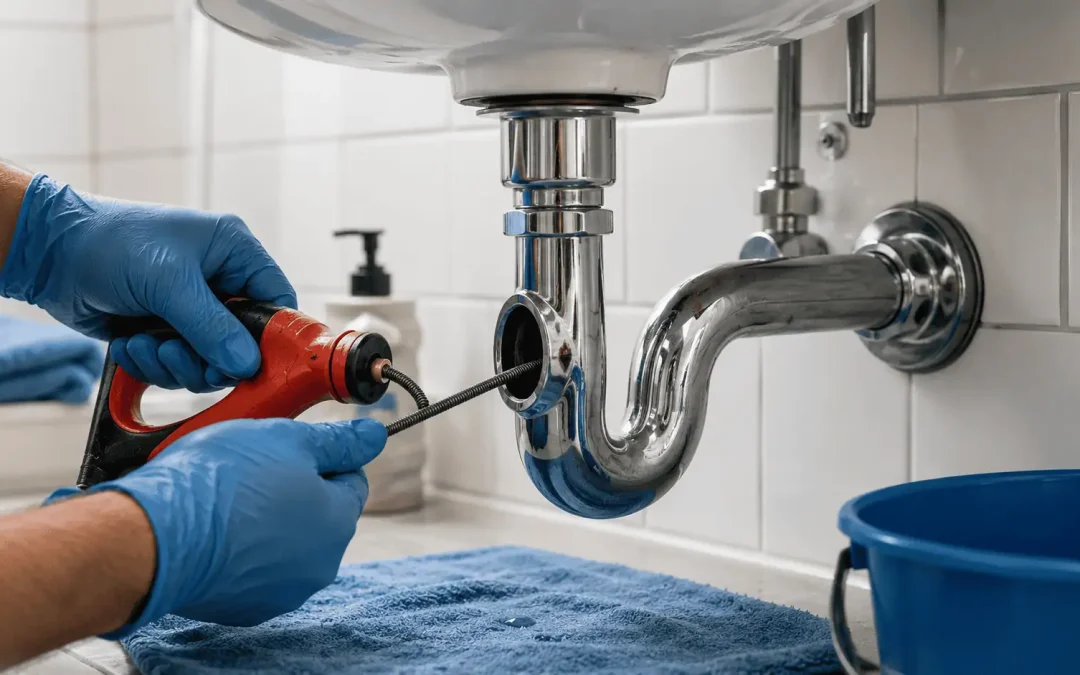
If the clog is still there, the problem may be in the P-trap. The P-trap is the curved pipe under the sink. It holds water to block sewer gases from coming back into your home, but it can also trap hair, sludge, and small items.
Before removing the P-trap, place a bucket underneath it to catch water. Use an adjustable wrench or your hands to loosen the slip nuts on both ends of the curved pipe. Carefully remove the trap and empty it into the bucket.
Clean the inside of the P-trap with a brush, paper towel, or running water from another sink. Check for buildup, jewelry, toothpaste caps, or other objects that may have fallen down the drain.
After cleaning, reattach the P-trap securely. Run water and check for leaks. If everything stays dry and the sink drains normally, you have likely solved the problem.
Step 7: Use a Drain Snake
If the clog is beyond the P-trap, a drain snake may be needed. A drain snake is a flexible cable that reaches deeper into the pipe to break apart or pull out clogs.
Insert the snake into the drain line slowly. When you feel resistance, rotate the handle to work through the clog. Do not force it aggressively, since you could damage the pipe or push the clog farther down.
Once you break through or hook the clog, pull the snake back out. Clean off any debris, then run hot water to flush the drain.
Drain snakes can be effective, but they require care. If you are uncomfortable using one or the clog does not clear, it is time to call a professional plumber.
Should You Use Chemical Drain Cleaners?
Chemical drain cleaners are widely available, but they are not always the best choice. While they may seem convenient, they can be harsh on your plumbing and dangerous to handle.
Potential issues with chemical drain cleaners include:
- They may damage older pipes.
- They can produce strong fumes.
- They may not fully remove the clog.
- They can create hazards if a plumber needs to work on the drain later.
- Repeated use can weaken certain plumbing materials.
For bathroom sink clogs, mechanical removal is often more effective because hair is usually the main issue. Pulling out the clog is usually better than trying to dissolve it.
How to Prevent Bathroom Sink Clogs
Once your sink is draining properly again, a little prevention can go a long way. Bathroom sink clogs are common, but they are not inevitable.
Try these prevention tips:
- Use a drain cover to catch hair.
- Clean the sink stopper regularly.
- Avoid rinsing thick products down the drain.
- Do not flush cotton swabs, dental floss, or wipes down the sink.
- Run hot water after using toothpaste, shaving cream, or heavy soap.
- Clean the drain with baking soda and vinegar occasionally.
- Schedule preventive plumbing maintenance if clogs keep returning.
A few minutes of routine care can help you avoid the joyless experience of fishing mystery sludge from your drain. That is a win for everyone.
When to Call a Professional Plumber
DIY drain cleaning can work well for simple clogs near the drain opening or P-trap. However, some clogs require professional tools and experience.
Call a plumber if:
- The clog keeps coming back.
- Multiple drains in your home are slow.
- Water backs up into the sink.
- You smell sewer odors.
- You hear persistent gurgling sounds.
- You cannot remove the P-trap safely.
- A drain snake does not solve the problem.
- You suspect a larger plumbing issue.
Recurring clogs may point to a deeper blockage in the drain line, venting issue, pipe damage, or buildup farther inside your plumbing system. A professional plumber can diagnose the cause and fix it correctly.
Why Professional Drain Cleaning Matters
Professional plumbers do more than clear the immediate blockage. They can inspect your plumbing system, identify the source of the clog, and recommend solutions to prevent future issues.
A professional may use advanced tools to:
- Locate deep clogs
- Remove stubborn buildup
- Inspect drain lines
- Identify pipe damage
- Clear blockages safely
- Improve long-term drainage
This is especially important for older homes, frequent clogs, or plumbing systems that have not been serviced in a while. Clearing a clog is helpful, but understanding why it happened is even better.
FAQ About Unclogging a Bathroom Sink
What is the easiest way to unclog a bathroom sink?
The easiest first step is to remove and clean the sink stopper. Hair and soap scum often collect around the stopper, making it the most common cause of slow drainage.
Can baking soda and vinegar unclog a bathroom sink?
Yes, baking soda and vinegar can help with mild buildup and odors. However, they may not fully remove large hair clogs or deep blockages.
Is it safe to pour boiling water down a bathroom sink?
Use caution. Very hot water can help loosen residue, but boiling water may damage PVC pipes or older plumbing materials. Hot tap water is usually safer.
Why does my bathroom sink keep clogging?
Recurring clogs are often caused by hair, soap scum, toothpaste residue, or buildup deeper in the drain line. If the clog keeps returning, a professional plumber should inspect the system.
Can I use a toilet plunger on a bathroom sink?
It is better to use a small sink plunger. Toilet plungers are shaped differently and may not create the right seal for a bathroom sink drain.
Should I take apart the P-trap myself?
You can remove the P-trap if you are comfortable with basic plumbing and have a bucket ready. If the pipes are old, corroded, leaking, or difficult to loosen, call a plumber.
Are chemical drain cleaners bad for pipes?
They can be. Chemical drain cleaners may damage certain pipes, create fumes, and fail to fully remove the clog. Mechanical cleaning is often safer and more effective.
When should I call Lance Maxwell Plumbing?
Call Lance Maxwell Plumbing if your bathroom sink clog is stubborn, recurring, causing backups, producing odors, or affecting multiple drains in your home.
Call Lance Maxwell Plumbing, Your Trusted Jacksonville Plumber
When you need help with a clogged bathroom sink, a persistent drain issue, or any plumbing concern, turn to us at Lance Maxwell Plumbing, your trusted Jacksonville plumber. With more than 31 years of experience serving the Jacksonville and Orange Park areas, we provide dependable plumbing installation and repair services for homeowners, businesses, and new construction applications. From bathroom sink repairs and preventive maintenance to water heater installation and full-service plumbing solutions, our friendly and knowledgeable staff will do whatever it takes to ensure your needs are met. We also offer high-quality plumbing products from trusted brands like Delta, Kohler, and Moen. With on-call 24/7 availability, you can rest assured that our team will be there to resolve your plumbing issues, day or night. Contact us today, and one of our representatives will be glad to assist you in addressing your plumbing needs.