A slow or fully blocked kitchen sink can bring your entire routine to a stop, especially when dishes are piling up, and dinner cleanup has turned into an unwanted plumbing project. Knowing how to unclog a kitchen sink can help you solve many minor clogs safely, quickly, and without turning your cabinet into a splash zone. While some clogs are simple enough to handle with basic tools, others may point to deeper plumbing issues that need professional attention. The key is knowing what to try, what to avoid, and when it is time to call in a trusted Jacksonville plumber.
Why Kitchen Sinks Get Clogged
Kitchen sinks work hard every day. Between food scraps, grease, soap residue, coffee grounds, and the occasional mystery item that somehow made its way down the drain, clogs are almost inevitable over time. Even if you are careful, buildup can collect inside the drainpipe and narrow the opening until water can no longer flow freely.
Common causes of kitchen sink clogs include:
- Grease, fats, and cooking oils that solidify inside the pipe
- Food scraps that collect in the drain or garbage disposal
- Coffee grounds, eggshells, pasta, rice, and other expanding materials
- Soap scum and mineral buildup
- Foreign objects, such as twist ties, bottle caps, or small utensils
- Garbage disposal jams
- Poor drain slope or aging plumbing
Grease is one of the biggest troublemakers. It may go down as a liquid, but once it cools, it can stick to the walls of your pipes. Over time, it catches food particles and creates a stubborn blockage. Think of it as the plumbing version of a traffic jam, except less honking and more standing water.
Start With the Simple Fixes
Before grabbing tools or taking anything apart, start with the easiest solutions. Sometimes a kitchen sink clog is caused by loose debris near the drain opening, and a simple reset is all it takes.
First, remove any standing water if the sink is full. Use a cup or small container to transfer the water into a bucket. This makes the area easier to work with and helps prevent messy splashing.
Next, check the drain opening. Remove visible food, debris, or anything sitting near the strainer. If you have a garbage disposal, make sure it is turned off before reaching anywhere near the drain. For safety, never put your hand into the disposal chamber. Use tongs or pliers if you need to remove visible objects.
If your sink has a stopper or removable drain basket, take it out and clean it thoroughly. You might be surprised how much gunk can collect there. Or maybe not surprised. Kitchen sinks see things.
Try Hot Water
Hot water can help loosen grease and soap residue. This method works best for slow drains caused by light buildup rather than solid blockages.
To try this method:
- Boil water or heat water until very hot
- Carefully pour it down the drain in stages
- Wait a few minutes between pours
- Run the faucet to see if drainage improves
Use caution if you have PVC pipes. Boiling water may be too hot for some plastic plumbing materials, especially older pipes. In that case, use very hot tap water instead of boiling water. If you recently poured grease down the drain, hot water might move it along temporarily, but it can also push the grease deeper into the plumbing, where it cools and hardens again. This is why hot water is helpful, but not always a complete fix.
Use Baking Soda and Vinegar
Baking soda and vinegar are popular for minor drain clogs because they can help break up light buildup and deodorize the drain. This method is not a miracle cure for heavy blockages, but it is safe for many drains and worth trying before moving to more involved steps.
Here is how to do it:
- Pour about one cup of baking soda into the drain
- Follow with one cup of white vinegar
- Cover the drain opening if possible
- Let the mixture fizz for 10 to 15 minutes
- Flush the drain with hot water
The fizzing reaction can help loosen grime around the drain walls. It also helps reduce odors, which is a nice bonus if your sink has started smelling like last week’s leftovers.
Avoid mixing vinegar with chemical drain cleaners. Combining cleaning products can create dangerous fumes or reactions. If you have already used a chemical cleaner, do not add vinegar, baking soda, or any other product unless the cleaner label specifically says it is safe to do so.
Use a Plunger
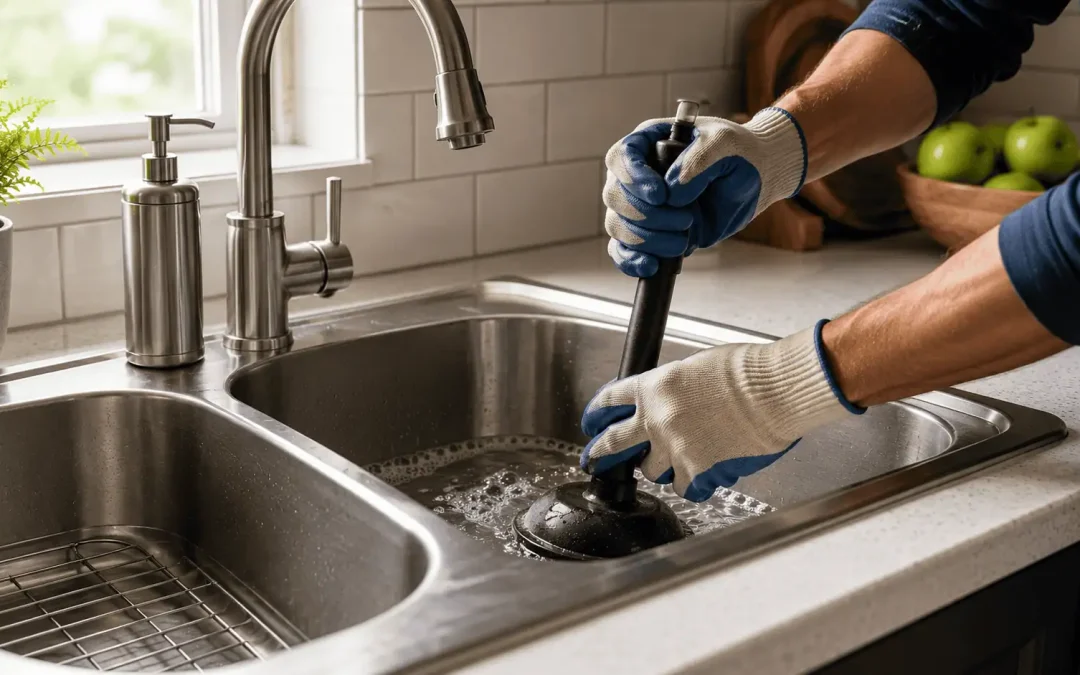
A plunger is one of the best tools for unclogging a kitchen sink. It creates pressure that can dislodge a blockage and restore flow. For kitchen sinks, use a cup-style plunger rather than a toilet flange plunger.
To plunge a kitchen sink:
- Remove standing water until there is just enough to cover the plunger cup
- Place the plunger firmly over the drain
- If you have a double sink, cover the other drain with a wet cloth or stopper
- Push and pull firmly for 15 to 30 seconds
- Lift the plunger and check whether the water drains
- Repeat several times if needed
The seal is important. Without a tight seal, the pressure will escape instead of moving through the pipe. If your sink has an overflow opening, cover it with a wet cloth as well.
If plunging brings up dirty water or debris, remove it and try again. A little mess is normal. A full kitchen sink geyser is not ideal, so keep towels nearby.
Check the Garbage Disposal
If your kitchen sink has a garbage disposal, the clog may be connected to the disposal itself. A jammed or overloaded disposal can stop water from draining properly.
Start by turning off the disposal and the power supply. Look under the sink for a reset button on the bottom of the unit. If the disposal has overheated or shut down, pressing the reset button may restore operation.
Many disposals also have a hex-shaped opening underneath. You can insert the correct Allen wrench into this opening and turn it back and forth to free the blades. Do not force it. Once it moves freely, restore power and run cold water while briefly turning on the disposal.
Never put your hand into the garbage disposal. Even when it is off, sharp parts can cause injury. Use pliers or tongs to remove visible debris.
Foods that commonly jam disposals include:
- Potato peels
- Onion skins
- Celery
- Corn husks
- Pasta and rice
- Bones
- Fruit pits
- Coffee grounds
- Eggshells
A garbage disposal is helpful, but it is not a food trash can with spinning teeth. Treat it kindly, and it will return the favor.
Clean the P-Trap
If plunging and natural methods do not work, the clog may be in the P-trap. The P-trap is the curved pipe under your sink. Its job is to hold water that blocks sewer gases from entering your home, but it can also catch food, grease, and debris.
To clean the P-trap:
- Place a bucket under the trap
- Put towels around the area
- Loosen the slip nuts on both ends of the trap
- Carefully remove the trap
- Empty the contents into the bucket
- Clean the inside with a bottle brush or an old toothbrush
- Reinstall the trap and tighten the nuts
- Run water to test for leaks
This step can be very effective, especially if the clog is close to the sink. However, be prepared for unpleasant smells and dirty water. The P-trap is not exactly the spa section of your plumbing system.
If the nuts are corroded, stuck, or fragile, do not force them. Older plumbing can crack or break if handled roughly. In that case, call a professional plumber.
Try a Drain Snake
A drain snake, also called a plumber’s auger, can reach clogs deeper in the pipe. Small hand-operated snakes are available at many hardware stores and can be useful for moderate clogs.
To use a drain snake:
- Insert the cable into the drain or pipe opening
- Slowly feed it forward until you feel resistance
- Rotate the handle to break up or hook the clog
- Pull the cable back carefully
- Remove debris and repeat if needed
- Flush the drain with hot water
A snake can be effective, but it can also damage pipes if used too aggressively. If you feel strong resistance, avoid forcing the cable. The clog may be beyond the reach of a basic tool, or there may be a more serious issue in the line.
Avoid Chemical Drain Cleaners When Possible
Chemical drain cleaners may seem convenient, but they can create problems. Many products use harsh ingredients that generate heat or corrosive reactions to dissolve clogs. These chemicals can damage pipes, especially if used repeatedly or if they sit in the line without clearing the blockage.
Chemical cleaners can also be dangerous if they splash back, mix with other products, or remain in the sink when a plumber needs to work on the drain. For households with children, pets, or older plumbing, it is usually better to use safer methods or call a professional.
How to Prevent Future Kitchen Sink Clogs
Once your sink is draining again, prevention is the next priority. A few simple habits can make a big difference.
To help keep your kitchen sink clear:
- Scrape plates into the trash before rinsing
- Avoid pouring grease, oil, or fat down the drain
- Use a drain strainer to catch food particles
- Run cold water while using the garbage disposal
- Keep water running for several seconds after disposal use
- Throw coffee grounds in the trash or compost
- Avoid putting rice, pasta, and fibrous foods down the disposal
- Flush the drain regularly with hot water
- Schedule preventive plumbing maintenance when needed
Grease should go into a disposable container, not the sink. Once it cools, throw it in the trash. Your pipes will appreciate the gesture, even if they cannot send a thank-you note.
When to Call a Professional Plumber
Some kitchen sink clogs are too stubborn or too deep for do-it-yourself methods. If the same drain keeps clogging, or if multiple drains in your home are slow, the issue may be deeper in your plumbing system.
Call a plumber if:
- The sink remains clogged after basic methods
- Water backs up into another drain
- You smell sewer odors
- The garbage disposal will not reset or operate properly
- Pipes under the sink are leaking
- The clog keeps coming back
- You hear gurgling from nearby drains
- You suspect a main line blockage
A professional plumber has the tools and experience to identify the true cause of the problem. This may include advanced drain cleaning equipment, inspection tools, and repair solutions that go beyond a basic plunger or hand snake.
FAQ
What is the fastest way to unclog a kitchen sink?
The fastest method is usually plunging. Make sure there is enough water to cover the plunger cup and seal any second drain opening if you have a double sink.
Can I pour boiling water down my kitchen sink?
You can use hot water, but boiling water may not be safe for all pipes, especially PVC or older plumbing. Very hot tap water is often a safer option.
Is baking soda and vinegar safe for kitchen drains?
Yes, baking soda and vinegar are generally safe for many kitchen drains and can help with minor buildup and odors. They may not clear severe clogs.
Why does my kitchen sink keep clogging?
Recurring clogs are often caused by grease buildup, food debris, garbage disposal issues, or a deeper blockage in the drain line.
Should I use chemical drain cleaner?
It is usually better to avoid chemical drain cleaners when possible. They can damage pipes, create safety risks, and make professional repairs more difficult.
Can a garbage disposal cause a sink clog?
Yes. A jammed or overloaded garbage disposal can block drainage, especially if fibrous foods, grease, pasta, rice, or other problem materials have gone through it.
When should I call a plumber for a clogged kitchen sink?
Call a plumber if the clog will not clear, keeps coming back, causes backups in other drains, or is accompanied by leaks, odors, or gurgling sounds.
Call Lance Maxwell Plumbing Today
If your kitchen sink clog is more than a quick fix, turn to Lance Maxwell Plumbing, your trusted Jacksonville plumber. With more than 31 years of experience, we proudly serve the Jacksonville and Orange Park areas with reliable plumbing installation and repair services. From new construction plumbing applications and water heater installation to preventive maintenance and urgent repairs, our friendly and knowledgeable team is committed to meeting every customer’s needs.
Plumbing problems do not always happen at convenient times, which is why we offer on-call 24/7 availability. Day or night, our team is ready to help resolve your plumbing issues with dependable service and professional care. We also offer a full line of high-quality plumbing products from trusted brands like Delta, Kohler, and Moen.
Do not let a clogged kitchen sink disrupt your day. Contact us today, and one of our representatives will be glad to assist you with your plumbing needs in Jacksonville, Orange Park, and the surrounding areas.