A slow-draining shower can turn a relaxing rinse into an ankle-deep plumbing mystery. If you are searching for how to unclog a shower drain, the good news is that many clogs can be handled with a few basic tools, a little patience, and the right approach. Hair, soap scum, body oils, mineral buildup, and small debris are the usual suspects, and over time, they can create a blockage that keeps water from flowing freely. Before you panic or start blaming everyone in the house with long hair, take a deep breath. This guide will walk you through practical, safe steps to clear a clogged shower drain and help you know when it is time to call a professional plumber.
Common Reasons Shower Drains Get Clogged
Shower drains work hard every day. Even if you are careful, plenty of material can make its way down the drain and collect inside the pipe. Understanding what causes the clog can help you choose the best solution.
The most common causes of shower drain clogs include:
- Hair buildup: Hair is one of the biggest causes of shower drain clogs. It can bind with soap and residue, creating a stubborn blockage.
- Soap scum: Traditional bar soaps can leave behind residue that sticks to pipe walls and traps debris.
- Hard water minerals: In areas with mineral-heavy water, scale buildup can narrow the inside of pipes over time.
- Dirt and debris: After yardwork, sports, beach trips, or messy projects, dirt can rinse off and settle inside the drain.
- Product residue: Shampoo, conditioner, shaving cream, bath oils, and exfoliating scrubs can all contribute to buildup.
- Small objects: Bottle caps, razor covers, jewelry, and other tiny items can accidentally slip into the drain.
A clog may start small, but it can get worse if ignored. If water is pooling around your feet or taking several minutes to disappear, it is time to act.
Signs Your Shower Drain Is Clogged
Some clogs are obvious. Others develop slowly and sneak up on you. Recognizing the warning signs early can save you from bigger plumbing problems later.
Watch for these common signs:
- Water drains slowly after each shower.
- Standing water collects around the drain.
- The drain makes gurgling sounds.
- Bad odors come from the drain.
- Water backs up into the tub or shower.
- Multiple drains in your home are draining slowly.
If only one shower drain is slow, the clog is probably located near that fixture. If several drains are slow at the same time, there may be a larger issue in your plumbing system, possibly involving the main drain line. That is when professional help becomes especially important.
Start With a Visual Inspection
Before reaching for tools or cleaners, start with the simplest step: look at the drain. Remove the drain cover if possible and check for visible hair or debris. Some covers lift out easily, while others are held in place by screws. Keep any screws in a safe place so they do not become part of the plumbing problem.
Use a flashlight to inspect the opening. If you see hair or buildup near the surface, put on rubber gloves and remove as much as you can by hand. Yes, this is the least glamorous part of the job. No, it will not be featured in a home design magazine. But it often works.
Once you remove the visible debris, run hot water for a minute or two and see if the drain improves. If it still drains slowly, move on to the next method.
Try Boiling or Very Hot Water
Hot water can help break down soap scum, grease, and soft buildup inside the drain. This method works best for minor clogs caused by residue rather than solid objects or heavy hair buildup.
Here is how to do it:
- Heat a pot or kettle of water.
- Carefully pour the hot water directly into the drain in stages.
- Wait a few seconds between pours.
- Run the shower to test the drainage.
Use caution if you have PVC pipes. Boiling water can potentially soften or damage some plastic piping, especially if used repeatedly. Very hot tap water is a safer option for many homes. If you are unsure about your plumbing materials, skip this step or contact a plumber.
Use Baking Soda and Vinegar
For a more natural drain-cleaning option, try baking soda and vinegar. This method can help loosen light buildup and freshen the drain. It is not a magic volcano of plumbing perfection, but it can be useful for mild clogs.
Follow these steps:
- Pour about one cup of baking soda into the drain.
- Add one cup of white vinegar.
- Let the mixture fizz for 15 to 30 minutes.
- Flush the drain with hot water.
- Repeat once if needed.
This method is best for maintenance or small clogs. If the drain is completely blocked, the solution may not reach the clog effectively. Also, never mix vinegar with chemical drain cleaners. Combining cleaning products can create dangerous fumes or reactions.
Use a Plunger
A plunger is not just for toilets. A cup plunger can also help clear a clogged shower drain by using pressure to loosen the blockage.
To plunge a shower drain:
- Remove the drain cover if possible.
- Add enough water to cover the bottom of the plunger cup.
- Place the plunger over the drain to create a tight seal.
- Push down and pull up firmly several times.
- Lift the plunger and check whether water drains.
- Repeat as needed.
For tubs with overflow drains, cover the overflow opening with a wet cloth to improve suction. Without a good seal, the pressure may escape instead of pushing against the clog.
Try a Drain Snake or Hair Removal Tool
If plunging does not work, the clog may be deeper in the drain. A plastic hair removal tool or drain snake can often reach the blockage and pull it out.
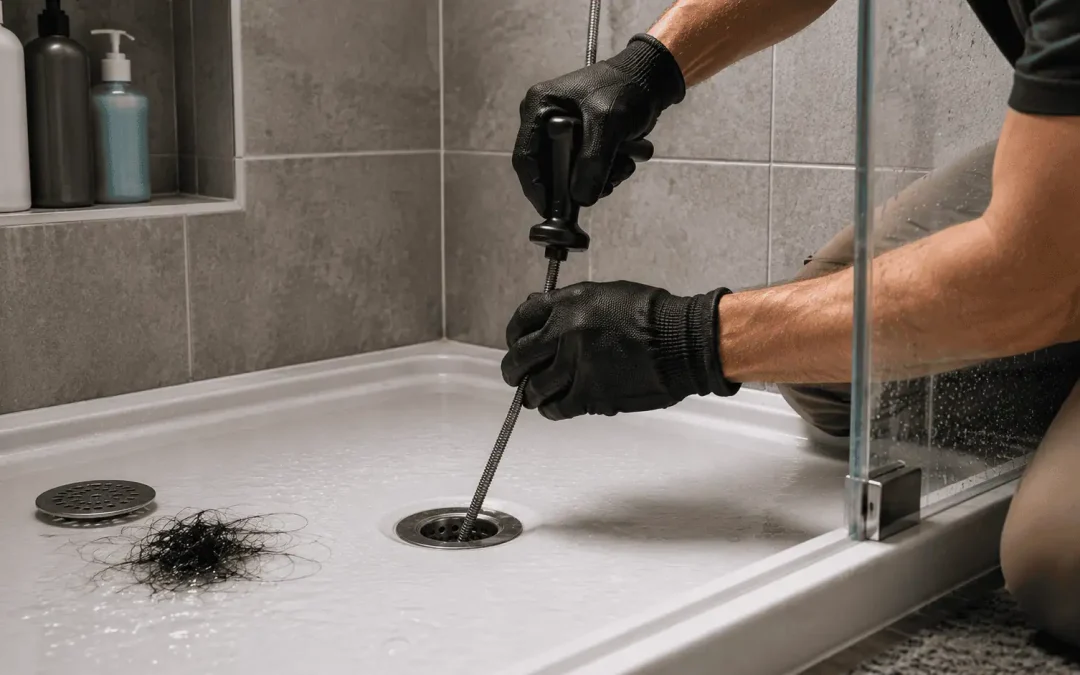
A plastic drain cleaning tool is inexpensive and easy to use. Insert it into the drain, move it gently, and pull it back out. Be prepared: what comes out may look like it has been living rent-free in your pipes for years.
For deeper clogs, a hand-crank drain snake may be more effective. Insert the snake into the drain and rotate it as you push forward. When you feel resistance, continue turning to break up or hook the clog. Pull the snake back slowly and clean off any debris.
A few safety tips:
- Wear gloves.
- Move slowly to avoid damaging the pipe.
- Do not force the snake aggressively.
- Clean and disinfect the tool afterward.
- Stop if the snake gets stuck or you feel strong resistance.
If you are not comfortable using a drain snake, calling a plumber is the safer option.
Clean the Drain Stopper or Cover
Sometimes the clog is not deep in the pipe. It may be attached to the drain stopper, screen, or cover. Hair and soap scum often wrap around these parts, restricting water flow.
Remove the cover or stopper and clean it thoroughly. Use an old toothbrush, mild cleaner, and warm water to scrub away buildup. Once it is clean, reinstall it and test the shower.
This step is also a smart preventive maintenance habit. Cleaning the drain cover regularly can keep clogs from forming in the first place.
Avoid Harsh Chemical Drain Cleaners
Chemical drain cleaners may seem convenient, but they can create problems. Many are highly corrosive and can damage pipes, especially if used frequently. They can also be dangerous to handle and may not fully remove the clog. In some cases, they simply burn a small path through the blockage while leaving most of the buildup behind.
Chemical cleaners can be especially risky if:
- Your pipes are old or fragile.
- The drain is fully blocked.
- You have already tried another cleaning product.
- You have a septic system.
- You may need a plumber to work on the drain afterward.
If chemicals are sitting in the pipe and a plumber has to open the drain, it can create a safety hazard. When in doubt, choose mechanical removal methods or call a professional.
When to Call a Professional Plumber
DIY methods can work well for small, routine clogs. However, some drain problems need professional equipment and experience. If you keep trying home remedies without success, you may only delay the real fix.
Call a plumber if:
- The clog keeps coming back.
- Water is backing up into other drains.
- You smell sewage odors.
- The shower is completely blocked.
- You hear gurgling from nearby drains.
- You suspect a main line issue.
- You have tried plunging and snaking without success.
- You live in an older home with aging pipes.
A professional plumber can inspect the problem, clear the blockage safely, and identify whether there is a larger issue. This is especially important if the clog is caused by pipe damage, tree roots, heavy mineral buildup, or problems deeper in the plumbing system.
How Professionals Clear Shower Drain Clogs
Professional plumbers have access to tools that go beyond basic home methods. Depending on the situation, they may use drain augers, powered snakes, hydro jetting, or camera inspections.
A camera inspection can be especially helpful when clogs keep returning. It allows the plumber to see inside the line and locate the exact problem. Hydro jetting may be used for tough buildup because it uses high-pressure water to clean the inside of the pipe.
Professional drain cleaning does more than restore water flow. It can help protect your plumbing system from future damage and reduce the chance of recurring clogs.
How to Prevent Future Shower Drain Clogs
Once your shower drain is clear, prevention is the next priority. A few simple habits can help keep your drain flowing smoothly.
Try these prevention tips:
- Use a drain screen or hair catcher.
- Clean the drain cover weekly.
- Brush hair before showering to reduce shedding.
- Avoid rinsing thick products down the drain.
- Flush the drain with hot water regularly.
- Schedule preventive plumbing maintenance when needed.
- Address slow drains early before they become full clogs.
A drain screen is one of the easiest and most affordable ways to prevent clogs. It catches hair before it enters the drain, and cleaning it takes only a few seconds. Not exciting, but very effective.
Why Preventive Maintenance Matters
Preventive maintenance can help you avoid inconvenient plumbing surprises. A slow drain may seem like a small issue, but repeated clogs can indicate buildup inside your pipes. Over time, that buildup can lead to more serious blockages, unpleasant odors, and even water damage if backups occur.
Professional maintenance is especially valuable for busy households, rental properties, older homes, and commercial spaces. Having a trusted plumber inspect and maintain your system can help you catch problems early and extend the life of your plumbing.
FAQ About How to Unclog a Shower Drain
What is the easiest way to unclog a shower drain?
The easiest first step is to remove the drain cover and pull out visible hair or debris. Many shower clogs are close to the surface and can be cleared without special tools.
Can I use boiling water to unclog my shower drain?
Hot water can help dissolve soap scum and light buildup, but boiling water may not be safe for all pipes, especially PVC. Very hot tap water is often a safer choice.
Does baking soda and vinegar really work?
Baking soda and vinegar can help with mild buildup and odors, but they may not clear a serious hair clog or deep blockage.
Is it safe to use chemical drain cleaner?
Chemical drain cleaners can damage pipes and create safety risks. It is usually better to try manual methods first or call a professional plumber.
Why does my shower drain keep clogging?
Recurring clogs are often caused by hair, soap scum, mineral buildup, or a deeper issue in the plumbing line. A professional inspection can help identify the cause.
How often should I clean my shower drain?
For best results, clean the drain cover or hair catcher weekly. Flush the drain periodically with hot water to reduce buildup.
When should I call a plumber for a clogged shower drain?
Call a plumber if the clog keeps coming back, the drain is fully blocked, water backs up elsewhere, or you notice sewage odors or gurgling sounds.
Call Lance Maxwell Plumbing Today
A clogged shower drain can be frustrating, but you do not have to deal with it alone. Whether your drain needs professional cleaning, your pipes need inspection, or your plumbing system requires a more advanced repair, we are ready to help. As your trusted Jacksonville plumber, we have more than 31 years of experience providing plumbing installation and repair services throughout the Jacksonville and Orange Park areas. Our team offers a full line of plumbing services, including new construction applications, water heater installation, plumbing repairs, and preventive maintenance services. With friendly, knowledgeable staff, high-quality products from trusted brands like Delta, Kohler, and Moen, and on-call 24/7 availability, we are here whenever plumbing problems strike, day or night. Contact us today, and one of our representatives will be glad to assist you with your plumbing needs.