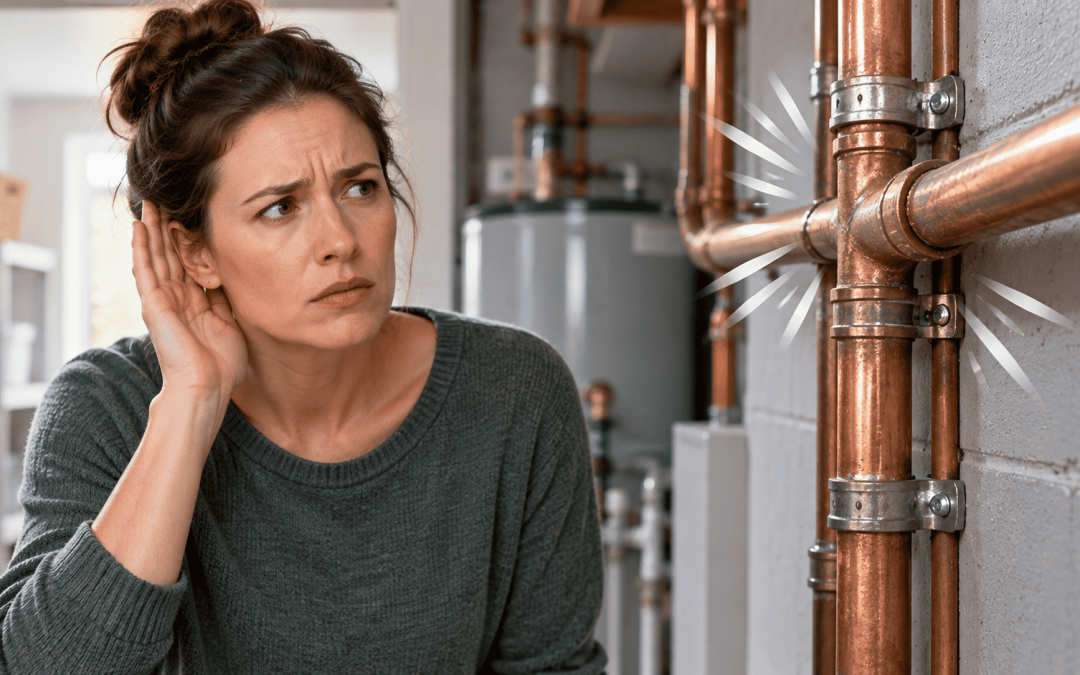
That sudden bang behind the drywall at 2 a.m. or the high-pitched squeal every time someone turns on the shower: those sounds are not random. Your plumbing is telling you something, and the message is usually more specific than you might expect. At Lance Maxwell Plumbing, we’ve been pinpointing these exact noises for neighbors across Orange Park, Jacksonville, and Middleburg since the early 1990s. We’ve been keeping Orange Park neighbors safe since the ’90s, and the same handful of culprits show up again and again. Don’t worry, we’ll take care of it. We know the signs. Understanding what each sound means is the fastest way to figure out whether you need a five-dollar washer or a licensed master plumber on-site before the weekend.
The Mystery of the Whistling Pipe: Why Your Plumbing Is Squealing
Think about what happens when you blow air across the narrow opening of a soda bottle: the tighter the opening relative to the airflow, the higher and more insistent the pitch. Water moving through your pipes works the same way. The physics are simple. When restricted water flow forces water through a passage narrower than the system was designed to handle, the velocity spikes and the pipe vibrates, producing that distinctive whistle or squeal. Two of the most common causes are mineral scale buildup lining the interior walls of older pipes, which is like sand at the bottom of a coffee pot where, over time, it piles up and slows everything down, and a valve that isn’t fully open, creating an artificial bottleneck. The result in both cases is high-velocity water squeezing through a constriction and generating acoustic vibration along the pipe wall.
When the whistling seems to track a specific fixture, like the shower, a bathroom sink, or a hose bib, the source is usually inside the valve assembly itself rather than in the supply line. A worn-out rubber washer, a loose valve stem, or a failing cartridge will flutter as water rushes past it, producing a squeal that can range from a soft hiss to a sharp, ear-splitting tone. Replace the degraded component. This almost always eliminates the noise. It’s worth noting that these same flow restrictions that generate whistling can also contribute to pressure disruptions elsewhere in the system. If you’re seeing sluggish flow at other fixtures simultaneously, reviewing low water pressure causes can help you connect the dots between what you’re hearing and what you’re feeling at the tap.
Why Do My Pipes Whistle When I Flush the Toilet?
The toilet fill valve is one of the more complex components in a residential plumbing system. When you flush, the valve opens fully to refill the tank, then gradually closes as the float rises with the water level. If the internal diaphragm or seal inside that valve has degraded, water squeezing through the decaying rubber creates a vibration during the refill cycle: sometimes a whistle, sometimes a low foghorn moan, sometimes a sound that’s genuinely difficult to describe to a plumber over the phone. We’ve seen this plenty of times before. The fix is simple. Here’s what you need to know for a quick diagnostic: during the next flush, reach into the tank and lift the float arm upward. If the noise stops or drops significantly, the fill valve is the source, and a replacement valve, which is a simple DIY job for most homeowners, will solve it.
Four specific conditions inside the toilet’s supply system generate this kind of noise:
- Worn-out fill valve diaphragm: The rubber gasket inside the fill valve degrades over time, causing high-frequency vibrations during the refill cycle that can range from a faint hiss to a sustained whistle.
- Partially closed supply valve: The shut-off valve behind the toilet must be fully open. Even a quarter-turn restriction creates enough turbulence to produce a whistling sound on every flush.
- Debris in the valve assembly: Small bits of sediment or rust from municipal water lines can lodge in the valve seat, generating a tone whenever water passes through the narrowed gap.
- High municipal water pressure: When incoming pressure is higher than the fill valve was rated for, water enters the tank faster than the valve can regulate, producing a squealing noise throughout the refill cycle.
If that whistling toilet or squealing faucet is driving you crazy, you don’t have to live with the noise. Your neighbors at Lance Maxwell are ready to help. Whether you need a quick valve replacement or a complete system check, we have master plumbers on call day or night to bring peace back to your home. Reach out to a trusted plumber in Orange Park, FL today, and we’ll handle the rest.
The Shockwave Effect: What Causes Pipes to Bang and Clatter?
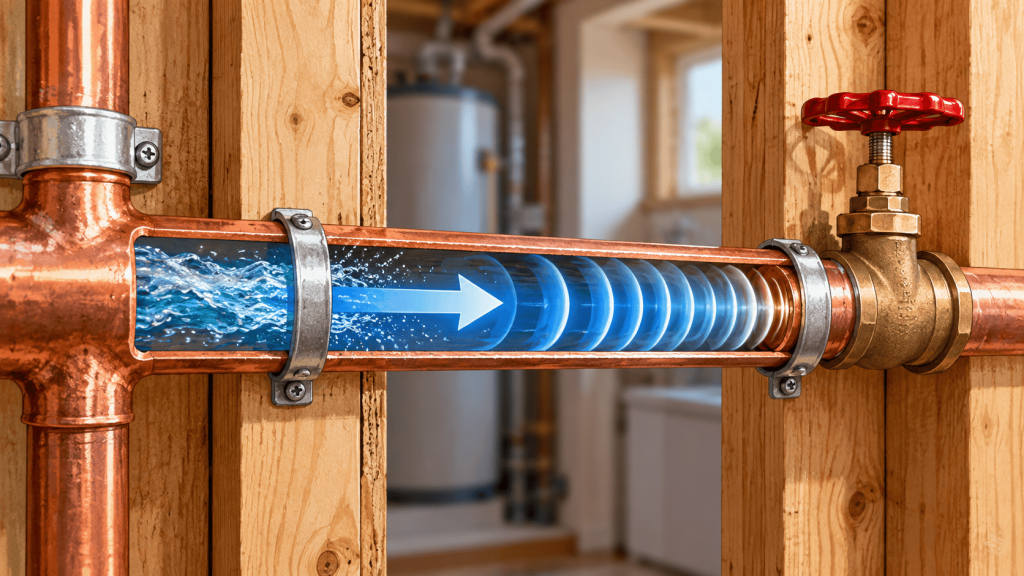
Water flowing through your pipes carries real momentum: picture a car moving at highway speed. When a faucet closes abruptly, or an appliance valve snaps shut, that moving column of water has nowhere to go. It slams into the closed valve with immense force, generating a water hammer event: a pressure spike that sends a hydraulic shock wave traveling backward through the supply line. That shockwave is what you hear as a sharp bang or a series of clanks against the wall framing. A single event might startle you; repeated events, over months and years, are doing measurable damage to your system. Do not ignore them.
Modern washing machines and dishwashers have made this problem considerably worse. They shut off fast. Their solenoid valves close in milliseconds, far faster than a human hand ever could, and that near-instantaneous shutoff generates pressure spikes that older plumbing systems were never engineered to absorb. Each spike stresses solder joints, loosens pipe hangers, and can eventually open up pinhole leaks inside walls where you won’t notice the damage until you’re looking at a mold remediation bill. In homes with aging galvanized or polybutylene lines, this kind of cumulative stress hastens the case for whole-house repiping services well before the pipes would otherwise fail or result in a burst pipe.
Several distinct conditions contribute to banging and clattering, and they’re not always present together:
- Water hammer arrestors: These small chambers contain a pressurized air cushion that absorbs the kinetic energy of the shockwave, preventing the bang at the source. They are the most direct fix and can be screwed onto supply lines without cutting into walls.
- Waterlogged air chambers: Older homes use vertical pipe extensions as air cushions, but these fill with water over time and lose their dampening effect entirely, leaving the system unprotected.
- Loose pipe straps: If the metal or plastic straps securing your pipes to the framing are loose or missing, even routine pressure fluctuations will cause the lines to rattle against studs and joists.
- Corrosion of pipe hangers: This is a particular concern in Northeast Florida’s humid coastal climate, where salt air hastens rust on metal hardware and can leave lines completely unsecured inside the wall cavity.
“Your family’s comfort and safety are everything when it comes to your home’s infrastructure. A banging pipe isn’t just an annoying sound: it’s a physical warning that high-pressure shockwaves are actively stressing your plumbing joints. Addressing water hammer early protects your home from a sudden burst pipe.” – Lance Maxwell Plumbing Expert Team
The Role of High Water Pressure and Thermal Expansion
High municipal water pressure magnifies every other problem in this article. When pressure runs above the recommended range, it increases water velocity throughout the system, which means any minor restriction, like a slightly worn washer, a narrow elbow fitting, or a partially scaled pipe, generates more noise than it otherwise would. Thermal expansion adds a second layer of pressure stress that most homeowners don’t think about until something fails. When your water heater heats a tank of water in a closed plumbing system, meaning one with a backflow preventer or check valve on the supply line, the expanding water has no place to go except into the distribution pipes. This causes pressure to spike well above the system’s normal operating level. Think of a thermal expansion tank as a tiny cushion that gives your water heater room to breathe so it doesn’t burst. Without it, that spike can trigger whistling, banging, and, over time, joint failures. This ruins pipes.
Florida’s building code addresses this directly. Safety comes first. According to the Florida Building Code Water Supply Presentation, water service pipes must be sized to deliver water at required pressures and quantities, with a minimum service pipe size of 3/4 inch. The same code standards require that a pressure-controlling device be installed on water service systems sized up to 2 inches when thermal expansion causes downstream pressure to exceed the pressure-reducing valve‘s setting. In practice, that means a properly installed thermal expansion tank on your water heater isn’t optional in a closed system: it’s a code-mandated shield against exactly the kind of pressure spikes that generate noise and damage joints.
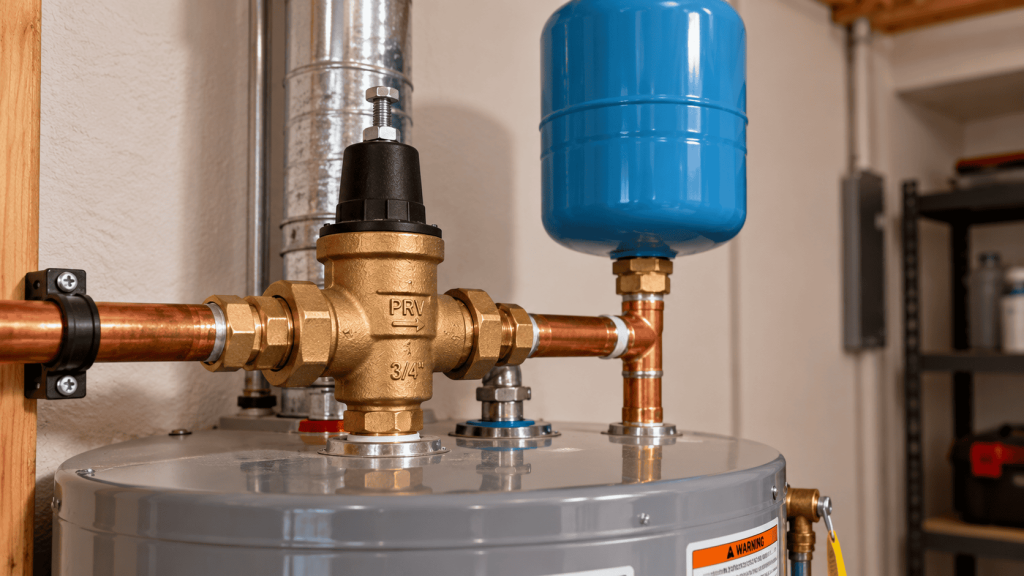
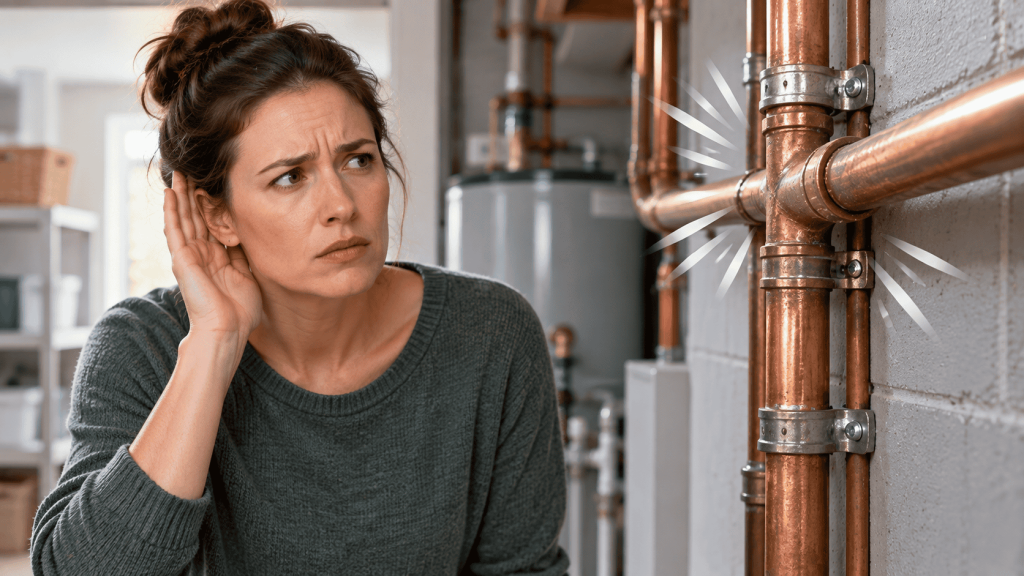
High water pressure and thermal expansion aren’t just noisy: they put your entire plumbing system at risk. Your neighbors at Lance Maxwell have been keeping Orange Park neighbors safe since the ’90s. We can test your water pressure, inspect your thermal expansion tank, and install a high-quality pressure-reducing valve to restore peace of mind. Contact Lance Maxwell Plumbing today, and let us handle the rest.
How to Troubleshoot and Fix Noisy Pipes
Most homeowners can work through a systematic sequence of checks before picking up the phone, and a few of these fixes require nothing more than a trip to the hardware store:
- Test your water pressure: Attach a simple pressure gauge to an outdoor hose bib to get a static reading. Residential systems should generally operate between 40 and 80 psi; anything above that range warrants a conversation with a plumber about installing a pressure-reducing valve.
- Bleed the plumbing system: For homes with older air chambers, shut off the main water supply, open every faucet in the house to drain the lines completely, then restore the main supply. This reintroduces air into the chambers and can eliminate water hammer without any hardware at all.
- Inspect visible pipe straps: Check accessible pipes in your basement, crawlspace, or attic to confirm they’re snug against the framing. A loose strap costs less than a dollar to replace and can eliminate a surprising amount of rattling.
- Install water hammer arrestors: Screw-on arrestors attach directly to the supply lines behind your washing machine and dishwasher. There is no soldering or wall cutting involved, and they absorb the shockwave at the point where fast-closing solenoid valves generate it.
- Check all shut-off valves: Walk through the house and confirm that every main and fixture shut-off valve is turned fully to the open position. A valve that’s even slightly restricted can generate a persistent whistle at that fixture.
Bleeding your lines or tightening a loose strap on an exposed pipe are genuinely good DIY projects. They are simple. Tasks involving the main pressure-reducing valve, the thermal expansion tank, or any work inside a closed wall are a different matter. Pressurized water lines require the right tools, the right parts, and, in Florida, a licensed master plumber for anything that touches the main service or distribution system. Getting that work wrong doesn’t just risk a flooded utility room; it can void appliance warranties and create code violations that surface during a home sale. You can count on us to get it right. We have the tools. When in doubt, a diagnostic visit from a licensed plumber is far less expensive than the alternative.
Frequently Asked Questions About Noisy Pipes
How do I stop my pipes from whistling?
Start by checking your home’s static water pressure with an affordable gauge on an outdoor spigot: high pressure is the single most common driver of whistling. From there, confirm that every shut-off valve in the system is fully open, since even a quarter-turn restriction can generate a high-pitched squeal at that fixture. If the whistling is confined to one faucet or showerhead, the fix is usually a worn-out washer or a failing cartridge inside the valve assembly. Replacing that component typically resolves the noise immediately.
Is it normal for my pipes to whistle?
Whistling is not a normal operating sound and is a reliable indicator of an underlying condition that deserves attention. It most commonly points to elevated water pressure, mineral scale narrowing the interior of the pipe, or a loose or degraded component inside a faucet or toilet fill valve. It is like sand at the bottom of a coffee pot: over time, mineral scale piles up and slows everything down, choking the water flow. Left unaddressed, the same conditions that generate the noise also accelerate wear on valve seats, fittings, and appliance connections throughout the system.
How do I fix squealing water pipes?
Squealing is almost always a vibration problem at the valve level rather than a pipe-level issue. A worn rubber washer or a loose valve stem inside a faucet flutters as water rushes past it, producing a high-frequency squeal that can carry through the wall. Replacing the washer, the cartridge, or the entire faucet assembly eliminates the vibration source and, with it, the sound. If the squeal is coming from a shower valve, a cartridge replacement is usually the right call. Most manufacturers make cartridge replacement simple enough for a confident DIYer.
How can I stop my pipes from making noise?
The right fix depends on the sound. Banging from water hammer responds well to water hammer arrestors installed at the appliance supply lines, or to draining the system to restore waterlogged air chambers. Rattling and vibrating pipes need secure straps fastened to structural framing. Whistling calls for a pressure check and an inspection of faucet washers and valve components. For a broader approach to keeping your system quiet and healthy year-round, the plumbing maintenance tips on our blog cover preventive care across all the major noise categories.
How do I stop a humming noise in my water pipes?
A humming noise typically means water is vibrating as it moves through a partially closed valve or under pressure that exceeds what the system was designed to handle. The first step is confirming that every shut-off valve in the house is fully open: a valve that’s 90 percent open can generate a persistent hum at moderate flow rates. If opening all valves doesn’t resolve it, the hum is likely a pressure issue, and a licensed plumber can install or recalibrate a pressure-reducing valve to bring the system back into a stable operating range.
Give Us a Call Today
Whether your home is dealing with a minor squeal or a violent water hammer, ignoring these sounds only invites bigger headaches down the road. Taking action early protects your plumbing joints, preserves your appliances, and restores quiet to your household. For decades, our family at Lance Maxwell Plumbing has helped homeowners across Northeast Florida diagnose and resolve complex plumbing issues: from a simple fill valve swap to a full system pressure evaluation. We are always here to keep your home safe, dry, and running smoothly.
Ready to silence those noisy pipes once and for all? Don’t wait for a small vibration to turn into a major leak. Contact our master plumbers today to schedule a thorough system inspection and pressure test. For reliable, fast, and friendly Orange Park plumbing services, call us at (904) 209-9103. We are on call day or night and ready to help.