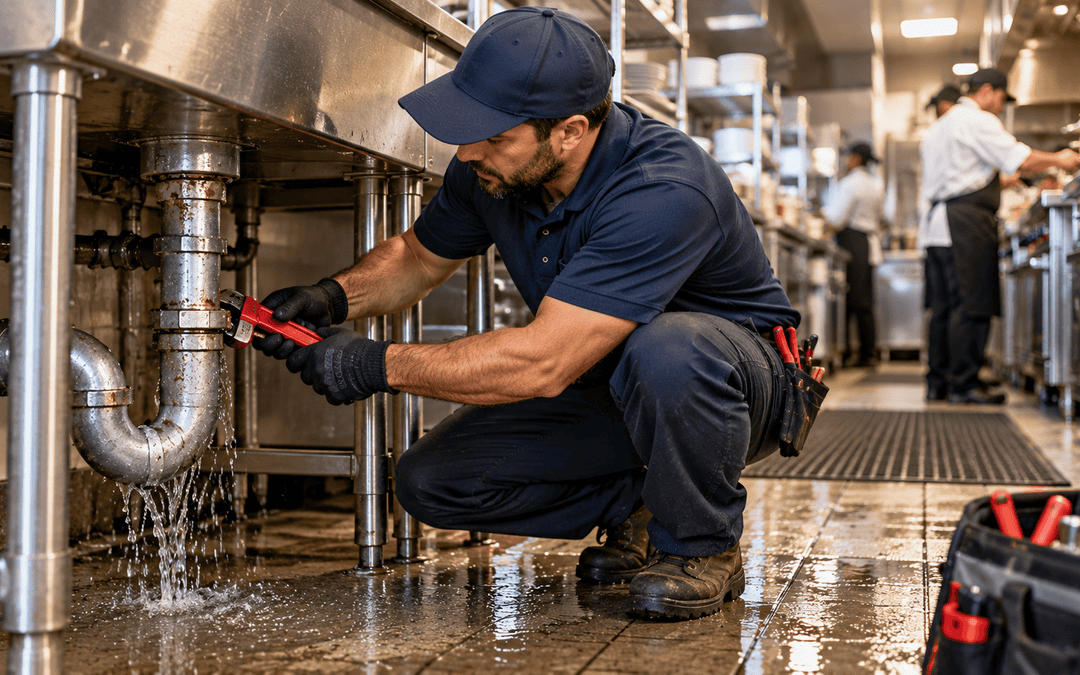
Whether it is a weird noise coming from your pipes, a soggy spot in the yard, or a backed-up drain during a Friday lunch rush, plumbing emergencies do not wait. A single backed-up drain can shut down your kitchen faster than any health inspector ever could. That means lost revenue. One unexpected drop in water pressure across three floors of an office building sends tenants scrambling and puts your facility management credibility on the line. Commercial plumbing systems operate under a level of continuous, punishing demand that residential systems simply never face, and when something goes wrong inside your walls, the consequences hit your bottom line immediately.
We have seen this plenty of times: a slow drain that gets ignored for a week turns into a full backup that forces a restaurant to close mid-service. A small drip behind a wall in an office building quietly wastes thousands of gallons before anyone notices the spike on the utility bill. The good news is that most of these problems follow expected patterns, and understanding those patterns is the first step toward stopping them before they become emergencies.
Common Commercial Plumbing Problems in Restaurants
Commercial kitchens are among the harshest environments a plumbing system will ever encounter. Between the constant flow of greasy water, food solids going down the drain, and the relentless demand for high-temperature water throughout every service, restaurant plumbing takes a beating that compounds daily.
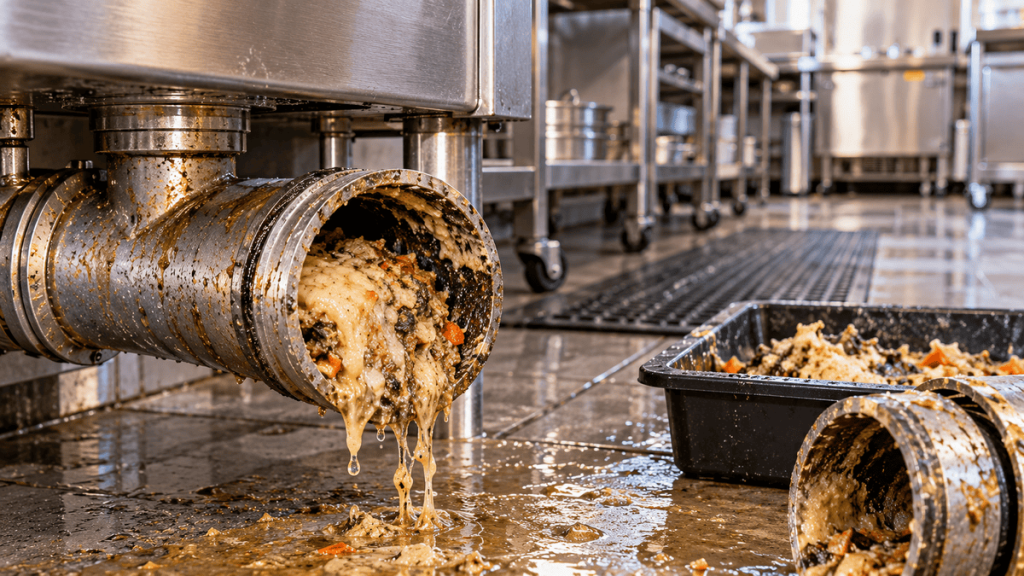
Grease trap cleaning for commercial kitchens sits at the top of the list for a reason. They fill up fast. Grease traps intercept fats, oils, and grease before they reach the municipal sewer line, but they have a limited capacity. When a trap goes too long between cleanings, it overflows into the main line, creating blockages that can back up every drain in the kitchen simultaneously. That is not just a plumbing inconvenience; it is a regulatory violation that can trigger immediate health department action.
Commercial water heater maintenance is another area where restaurants consistently run into trouble. Hot water is vital. Health codes require water at specific temperatures for sanitizing dishes and surfaces, which means your water heater runs harder and longer than any residential unit. Your water heater is the invisible hero that keeps your kitchen running and dishes sanitized. But when scale and mineral buildup settles at the bottom of the tank, it is like sediment at the bottom of a coffee pot. Over time, that layer acts as insulation between the heating element and the water, forcing the unit to work harder and recover more slowly. Nobody likes a freezing cold shower, and your restaurant customers certainly won’t tolerate lukewarm water for washing hands or dishes. Without regular flushing and inspection, you end up with inconsistent hot water during peak service hours.
A reactive approach: fixing things only when they break means you are always one bad drain day away from a forced closure. Scheduled maintenance keeps your kitchen compliant, your equipment running efficiently, and your staff focused on service rather than plumbing emergencies.
Why Slow Drains and Grease Traps Can Shut Down Your Kitchen
Fats, oils, and grease behave as expected: they flow freely when hot and solidify as they cool inside your pipes. A drain clog is that stubborn blockage that is holding up your day, and in a commercial kitchen processing hundreds of gallons of greasy water every single day, it is a ticking clock. A drain that runs slightly slow on Monday morning can be completely blocked by Thursday afternoon.
Chemical drain cleaners are not the answer here. They cause damage. They burn a small channel through a grease clog rather than clearing the pipe, and the harsh chemicals accelerate corrosion in older iron or galvanized steel lines. You get a temporary fix and a faster-deteriorating pipe, a trade no facility manager should accept.
Professional hydro-jetting cuts through grease accumulation and clears the full diameter of the pipe. Pairing that with a consistent grease trap service schedule keeps your kitchen out of the danger zone and on the right side of municipal compliance.
Here are the core practices that protect your kitchen drains:
- Schedule routine, professional grease trap cleaning to comply with local municipal codes and prevent line blockages.
- Train kitchen staff to never pour cooking oil or grease directly down the drain.
- Use high-quality sink strainers to catch solid food waste before it enters the plumbing lines.
- Partner with a trusted local plumber for regular, scheduled commercial drain cleaning services to keep lines clear.
Facing a stubborn backup in your kitchen? Don’t let a slow drain turn into an emergency shutdown. Schedule a professional diagnostic inspection and get your lines flowing smoothly with our professional drain cleaning services. We’ll be right over to take care of it so you can focus on your customers.
The Unique Plumbing Challenges of Office Buildings
Office buildings present a different set of plumbing stresses than restaurants, but they are no less demanding. High occupancy means restrooms cycle through hundreds of uses daily, and the fixtures that handle that volume, such as flushometer valves, sensor-activated faucets, and multi-stall configurations, require specialized knowledge that goes well beyond standard residential repair.
Commercial restroom plumbing repair in a multi-story building is genuinely complex. Leaks cost money. A running toilet on the fourth floor isn’t just a noise complaint; left unaddressed, it can waste tens of thousands of gallons per year. Flushometer valves have a tendency to stick open or fail to seal properly, and because they are engineered for high-frequency use, the wear cycle accelerates far faster than most facility managers anticipate.
Water loss at scale is where office buildings quietly lose money. According to U.S. Environmental Protection Agency Case Studies, in highly inefficient water distribution systems, water loss rates can reach up to 50 percent before major upgrades to water mains, meters, and storage tanks are implemented. Even in a moderately inefficient building, undetected leaks behind walls, under slabs, or in mechanical rooms can drive utility costs up dramatically before anyone traces the source.
Your day is busy, so we’ll work around your schedule to keep your tenants happy and your water bills low. We make it easy. That is exactly why commercial leak detection and repair needs to be a scheduled activity, not a response to a crisis. Routine monitoring, such as pressure testing, acoustic leak detection, and regular fixture audits, catches problems when they are still small and inexpensive to fix, rather than after they have caused structural water damage or mold growth inside your walls.
Understanding Water Pressure Drops and Pipe Degradation
Unexpected drops in water pressure across a commercial building rarely have a simple cause. Per the EPA Case Studies, pressure problems frequently trace back to undersized or deteriorating water mains, and the fix typically involves infrastructure upgrades, booster pump installation, or added storage capacity, not a quick patch at the fixture level.
Think of a deteriorating water main like a clogged straw. No matter how much pressure sits behind it, the restriction limits what comes out the other end. You can address symptoms at the tap all day, but the underlying water pressure issues won’t resolve until you deal with the main itself. Most commercial property owners spend months chasing fixture-level symptoms before someone finally looks at the water main, and by that point the damage is well established.
Older piping materials compound the problem significantly. Galvanized steel pipes that have been in service for decades develop internal corrosion and pitting, which progressively narrows the pipe’s interior diameter and creates rough surfaces where scale and debris accumulate (per the EPA Case Studies). Iron water lines face similar vulnerability: environmental factors accelerate corrosion from the outside while mineral deposits attack from within, eventually leading to leaks, breaks, and service disruptions. Replacing these lines with durable PVC piping reduces water loss and improves overall system reliability, as documented in the EPA Case Studies.
Aging water storage tanks add another layer of risk. They rust over time. Rust and corrosion inside a tank directly weaken pressure consistency and water quality, and a leaking tank can quietly drain thousands of gallons before it shows up on a meter reading. When underground pipe degradation is the culprit, you are looking at fixing the hidden veins that keep your business running smoothly. Professional sewer and water line repair is the only reliable path forward: camera inspection, targeted excavation, and proper material replacement rather than a spot repair that fails again in six months.
Watch for these warning signs across your building or property:
- Sudden, unexplained drops in water pressure across multiple floors or kitchen stations.
- Discolored or rusty water coming from fixtures, indicating internal pipe corrosion.
- Unexplained spikes in your monthly water utility bills, pointing to a hidden underground leak.
- Frequent clogs or gurgling sounds from drains, which are common signs of commercial sewer line damage.
How Preventative Maintenance Protects Your Bottom Line
Emergency plumbing calls are expensive in ways that go well beyond the invoice. When emergency plumbing repair for restaurants or office buildings happens mid-operation, you are paying for after-hours labor rates, expedited parts, and the operational downtime, plus the ripple effects on staff schedules, customer experience, and tenant satisfaction. A single emergency repair can easily cost three to five times what a scheduled maintenance visit would have prevented.
Reducing downtime with professional plumbing services comes down to treating your plumbing systems the same way you treat your HVAC or electrical systems: with a scheduled maintenance calendar, not a break-fix mentality. Regular pressure checks catch deteriorating regulators before they fail. This saves money. Routine drain cleaning prevents the slow buildup that turns into a full blockage. Water heater flushes extend equipment life and maintain consistent performance during peak demand periods.
A solid commercial plumbing maintenance checklist covers routine pressure audits, leak detection sweeps, grease trap service intervals, water heater maintenance, backflow preventer testing, and fixture inspections. When you integrate these into your quarterly facility management cycle, you stop reacting to problems and start taking a proactive approach to maintenance, and the cost difference over a year is significant.
Have an active plumbing crisis threatening to shut down your business today? Don’t panic. Our team is here day or night to handle your toughest commercial emergencies. Contact an emergency plumber in Orange Park right now, and we’ll be on our way to restore your operations.
Best Practices for Commercial Plumbing Systems
Protecting your plumbing infrastructure under heavy daily use comes down to a handful of operational habits that compound over time. Habits matter. The facility managers who avoid emergency calls aren’t lucky; they have built systems that catch problems early and address them on their own schedule, before a minor issue becomes a shutdown.
Partnering with a licensed commercial plumbing specialist who knows Florida’s building codes and municipal utility requirements matters more than most property managers realize. Local knowledge translates directly into faster diagnostics, correct permit handling, and material choices that hold up in Northeast Florida’s climate, where high humidity, sandy soil, and elevated water tables accelerate pipe corrosion in ways that catch out-of-region contractors off guard.
Integrating annual drain cleaning into your facility management plan is one of the simplest, highest-return investments you can make in your plumbing system’s lifespan. It pays off.
Here are the practices worth building into your standard operating procedures:
- Establish a strict “no-grease” policy in commercial kitchens and enforce regular grease trap maintenance.
- Perform monthly visual inspections of all exposed pipes, water heaters, and restroom fixtures for signs of slow leaks or corrosion.
- Train staff and tenants on what can and cannot be flushed down commercial toilets to prevent sewer line blockages.
- Schedule professional backflow testing and water pressure audits annually to ensure system safety and compliance.
Frequently Asked Questions About Commercial Plumbing
How often should a commercial grease trap be cleaned?
For most commercial kitchens, grease traps need cleaning every one to three months, depending on service volume and local municipal regulations. A practical rule of thumb is the “1/4 rule”: once the trap reaches a quarter capacity of fats, oils, and grease, it’s time for a professional cleaning to prevent backups and compliance violations. For more general upkeep guidance, browse our plumbing maintenance tips.
What causes sudden low water pressure in a commercial building?
Sudden pressure drops typically trace back to a malfunctioning pressure-reducing valve (PRV), a hidden main water line leak, or a disruption in the municipal supply. In older Northeast Florida buildings, internal pipe corrosion or deteriorating water mains can also restrict flow progressively over time, requiring professional diagnostics to locate the actual bottleneck rather than just treating the symptom at the fixture.
Why does my commercial water heater keep losing hot water?
In high-demand environments like restaurants, scale and mineral buildup at the bottom of the tank act as an insulating layer between the heating element and the water. It is like a thick crust of sediment that forces the unit to work twice as hard and results in under half the output. Regular flushing and commercial water heater maintenance clear that sediment and restore consistent hot water delivery during peak service hours.
Can I use chemical drain cleaners to clear commercial clogs?
Absolutely not. Chemical drain cleaners are highly corrosive and can damage commercial piping materials, particularly older iron or galvanized steel lines. They also only burn a narrow channel through a grease clog rather than clearing the full pipe diameter, which means the blockage returns quickly. Professional hydro-jetting is the only safe, long-term solution for commercial drain clogs. It works.
What are the signs of commercial sewer line damage?
Persistent foul odors in restrooms or kitchens, multiple fixtures draining slowly at the same time, gurgling sounds from drains, and wet patches or soft spots in the landscaping outside your building are all reliable indicators of sewer line damage. When you see more than one of these symptoms together, call for a camera inspection rather than waiting to see if the problem resolves on its own.
Contact Us Today
Commercial plumbing systems are complex networks that take a huge amount of daily punishment, and they reward the managers who treat them with a preventive eye. Grease traps, aging pipes, pressure fluctuations, and restroom fixture wear are all manageable, but only when you’re ahead of them rather than scrambling to catch up.
Lance Maxwell Plumbing has been serving Orange Park, Jacksonville, and the surrounding Clay and Duval County communities since 1994, building the kind of local knowledge that only comes from more than three decades of working on the same buildings, the same soil conditions, and the same municipal infrastructure. We’ve been keeping our neighbors safe since the ’90s, and you can count on us to handle your business with the same care we show our own. Give us a call, and we’ll handle the rest.
Ready to protect your business from unexpected plumbing disruptions? Whether you need routine grease trap maintenance, leak detection, or a complete system audit, our team is here to help. Contact Lance Maxwell Plumbing today to schedule your commercial plumbing service and keep your business running smoothly.