Knowing how to unclog a sink is one of those household skills that can save you time, stress, and possibly a call to a plumber when the problem is minor. A slow-draining sink may not seem like a big deal at first, but it can quickly turn into standing water, unpleasant odors, and a kitchen or bathroom routine that feels much more complicated than it should. Whether you are dealing with food scraps in the kitchen, hair and soap scum in the bathroom, or a mystery clog that seems to have arrived out of nowhere, there are several safe and practical ways to get things flowing again.
Why Sinks Get Clogged
Before you start fixing the clog, it helps to understand what may be causing it. Different sinks collect different types of debris, which means the best solution often depends on where the clog is located.
In the kitchen, clogs are often caused by grease, food particles, coffee grounds, pasta, rice, and other materials that should not go down the drain. Even if you have a garbage disposal, it is not designed to handle everything. Grease is especially sneaky because it may go down as a liquid, then cool and harden inside your pipes.
In the bathroom, the usual suspects are hair, toothpaste, soap residue, shaving cream, and beauty products. Over time, these materials can stick together and create a stubborn blockage. If your bathroom sink is draining slowly, there is a good chance hair and soap scum are involved.
Common causes of sink clogs include:
- Grease and cooking oil
- Food scraps
- Coffee grounds
- Hair
- Soap scum
- Toothpaste buildup
- Small foreign objects
- Mineral buildup in older pipes
- Improper drain use
The good news is that many minor clogs can be cleared with basic tools and a little patience. The bad news is that some clogs are deeper in the plumbing system and need professional attention. The sink is not always dramatic, but when it is, it really commits.
Start With Boiling Water
One of the easiest methods to try first is boiling water. This works best for minor clogs caused by soap residue, grease, or soft buildup. It is simple, inexpensive, and does not require any special equipment.
Bring a kettle or pot of water to a boil, then carefully pour it down the drain in two or three stages. Wait several seconds between each pour so the hot water has time to work through the buildup.
However, use caution. Boiling water is not recommended for all plumbing systems. If you have PVC pipes, repeated exposure to very hot water may damage the joints or soften the pipe material. If you are unsure what type of plumbing you have, use hot tap water instead of boiling water.
This method is best for:
- Light grease buildup
- Soap residue
- Slow drains that are not fully blocked
- Kitchen sinks with minor clogs
If the water drains normally afterward, you may have solved the problem. If it still drains slowly or not at all, move on to the next method.
Try a Plunger
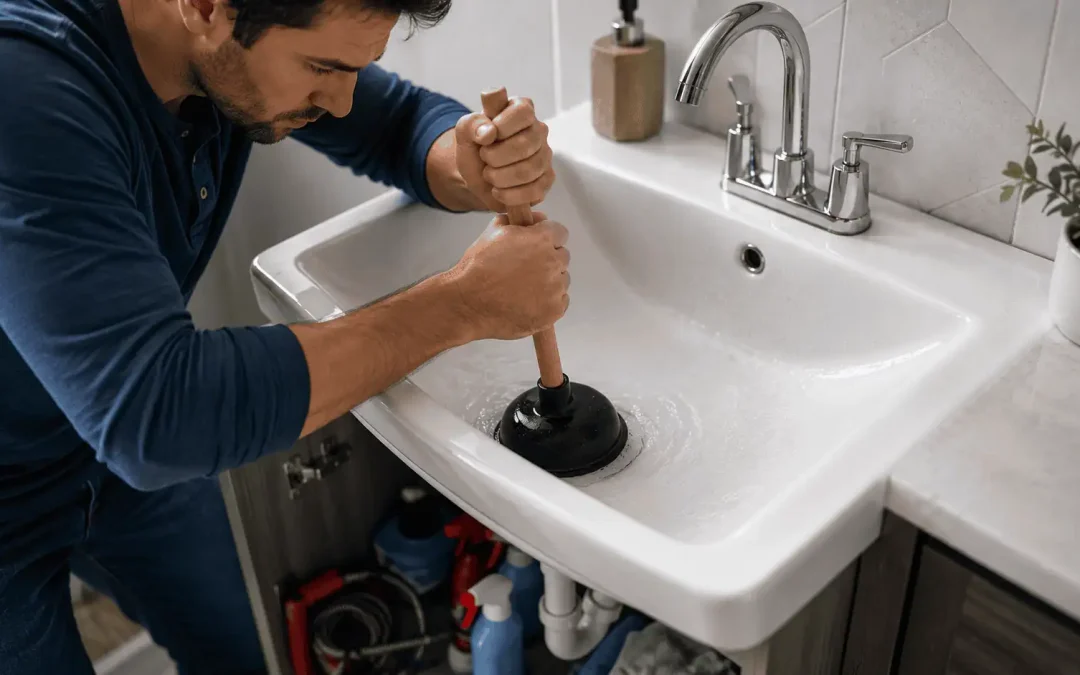
A plunger is one of the most reliable tools for unclogging a sink. Many people think plungers are only for toilets, but a standard cup plunger can be very effective on sink drains.
To use a plunger on a sink, fill the basin with enough water to cover the rubber cup. This helps create suction. Place the plunger firmly over the drain and pump it up and down several times. Keep the seal tight so pressure can build inside the drain line. After several pumps, lift the plunger and see if the water drains.
If you have a double kitchen sink, block the other drain with a wet cloth or stopper before plunging. This helps direct pressure toward the clog instead of letting it escape through the second drain.
Steps for plunging a sink:
- Add enough water to cover the plunger cup.
- Seal the plunger around the drain.
- Block any second drain or overflow opening.
- Pump several times firmly.
- Remove the plunger and check drainage.
- Repeat if needed.
A plunger works best when the clog is relatively close to the drain opening. If the blockage is deeper in the pipe, plunging may help loosen it, but it may not fully clear the problem.
Use Baking Soda and Vinegar
Baking soda and vinegar are a popular drain-cleaning combination because they are gentle, inexpensive, and easy to use. While this method may not destroy a major clog, it can help break down light buildup and freshen the drain.
Start by removing any standing water from the sink. Pour about half a cup of baking soda into the drain, followed by one cup of white vinegar. The mixture will fizz, which is normal. Cover the drain with a stopper or cloth and let it sit for 15 to 30 minutes. Afterward, flush the drain with hot water.
This method is helpful for:
- Mild odors
- Light buildup
- Routine drain maintenance
- Slow drains caused by soap residue
It is important to keep expectations realistic. Baking soda and vinegar can help with minor clogs, but they are not a magic plumbing potion. If a solid blockage is sitting in the pipe, this method may not be strong enough to clear it completely.
Clean the Stopper or Drain Cover
Bathroom sink clogs often happen right near the drain opening. Hair, soap, and toothpaste can collect around the stopper and create a slow drain. Cleaning the stopper may solve the issue without needing to work deeper in the pipes.
Many bathroom sink stoppers can be lifted out by hand, while others are connected to a pivot rod under the sink. If the stopper does not come out easily, look beneath the sink for the horizontal rod connected to the drainpipe. You may need to loosen the retaining nut and slide the rod out before removing the stopper.
Once removed, clean the stopper thoroughly. It may not be glamorous, but it is often effective. Use gloves, paper towels, and an old toothbrush if needed. After cleaning, run hot water down the drain to rinse away loosened debris.
Signs the stopper may be the problem include:
- Water drains slowly but does not fully back up.
- You see hair or debris near the drain opening.
- The sink has a musty smell.
- The stopper looks coated with grime.
This is one of the simplest fixes, especially for bathroom sinks.
Use a Drain Snake
If the clog is deeper than the stopper or drain opening, a drain snake may be the next best option. A drain snake, also called a plumber’s auger, is a flexible tool designed to reach into pipes and pull out or break apart clogs.
You can find small handheld drain snakes at most hardware stores. Insert the snake into the drain and slowly push it forward. When you feel resistance, rotate the handle to help the end of the snake catch the clog. Carefully pull it back out and dispose of any debris. Then flush the drain with hot water.
Drain snakes are especially useful for hair clogs in bathroom sinks. They can also help with kitchen sink blockages, depending on the material causing the clog.
Tips for using a drain snake:
- Wear gloves.
- Move slowly to avoid damaging pipes.
- Do not force the snake if it gets stuck.
- Clean the tool thoroughly after use.
- Flush the drain when finished.
If the snake does not reach the clog or the problem returns quickly, the blockage may be farther down the line.
Check the P-Trap
The P-trap is the curved section of pipe located under the sink. Its job is to hold a small amount of water that prevents sewer gases from coming back into your home. It is also a common place for clogs to collect.
Before removing the P-trap, place a bucket underneath it to catch water and debris. Loosen the slip nuts on both ends of the trap, then carefully remove the curved pipe. Clean out any buildup inside, rinse the trap, and reconnect it securely.
This method can be very effective if something small has fallen into the drain, such as a ring, toothpaste cap, or other object. It is also useful when food particles or thick buildup are trapped close to the sink.
After reinstalling the P-trap, run water and check for leaks. If you notice dripping, tighten the connections carefully. Do not overtighten, since that can damage plastic fittings.
Avoid Harsh Chemical Drain Cleaners
Chemical drain cleaners may seem convenient, but they can create bigger problems. Many contain strong ingredients that generate heat or corrode materials. They may damage pipes, especially if used repeatedly, and they can be dangerous if splashed on skin or mixed with other cleaners.
Chemical cleaners can also sit in standing water if they fail to clear the clog, making the sink more hazardous to work on later. If a plumber needs to take apart the drain, leftover chemicals can create a safety risk.
Instead of relying on harsh cleaners, try mechanical methods first, such as plunging, snaking, or cleaning the P-trap. These approaches are often safer for your plumbing and your home.
How to Prevent Future Sink Clogs
Once your sink is draining again, prevention is the next priority. A few simple habits can help keep your drains clear and reduce the risk of future clogs.
For kitchen sinks:
- Scrape plates into the trash before rinsing.
- Avoid pouring grease or oil down the drain.
- Use a drain strainer to catch food particles.
- Run plenty of water when using the garbage disposal.
- Avoid putting coffee grounds, eggshells, rice, or pasta down the drain.
For bathroom sinks:
- Use a drain cover to catch hair.
- Clean the stopper regularly.
- Rinse toothpaste and soap residue thoroughly.
- Avoid washing thick beauty products down the sink.
- Flush the drain with hot water occasionally.
Preventive maintenance is much easier than dealing with a full clog. Your sink does not ask for much, just a little respect and fewer coffee grounds.
When to Call a Professional Plumber
Some sink clogs are too stubborn for DIY methods. If you have tried basic solutions and the sink still will not drain, it is time to call a plumber. Professional plumbers have the tools and experience to locate the clog, clear it safely, and check for deeper plumbing issues.
Call a plumber if:
- The clog keeps coming back.
- Multiple drains are slow at the same time.
- Water backs up into another sink, tub, or shower.
- You smell sewer odors.
- The sink is completely blocked.
- You hear gurgling from the drain.
- There is water leaking under the sink.
- You suspect the clog is deep in the main drain line.
Recurring clogs may point to a larger issue, such as pipe damage, improper slope, tree root intrusion, or buildup inside the drain line. A professional can identify the cause instead of just treating the symptom.
FAQ About Unclogging a Sink
What is the fastest way to unclog a sink?
The fastest method is often using a plunger. If the clog is close to the drain, a plunger can create enough pressure to loosen it quickly.
Can I use boiling water to unclog any sink?
Not always. Boiling water may help with grease or soap buildup, but it can damage some PVC pipes or loosen pipe joints. Use hot tap water if you are unsure.
Is baking soda and vinegar safe for drains?
Yes, baking soda and vinegar are generally safe for most drains. They work best on light buildup and odors, not severe clogs.
Why does my sink keep clogging?
Recurring clogs often mean debris is building up deeper in the pipe, or there may be a plumbing issue that needs professional inspection.
Should I use chemical drain cleaner?
It is usually better to avoid harsh chemical drain cleaners. They can damage pipes, create safety risks, and may not fully solve the problem.
How do I unclog a bathroom sink full of hair?
Remove and clean the stopper first. If that does not work, use a small drain snake to pull out hair and debris.
What should I not put down my kitchen sink?
Avoid grease, oils, coffee grounds, eggshells, rice, pasta, and large food scraps. These materials can collect in the drain and cause clogs.
When should I call a plumber for a clogged sink?
Call a plumber if the clog is severe, keeps returning, affects multiple drains, causes odors, or leads to leaking or backups.
Call Lance Maxwell Plumbing Today
A clogged sink can interrupt your day, but the right help can get your plumbing back on track. If DIY methods are not solving the problem, turn to Lance Maxwell Plumbing, your trusted Jacksonville plumber. With more than 31 years of experience, we proudly provide plumbing installation and repair services throughout the Jacksonville and Orange Park areas. From new construction applications and water heater installation to preventive maintenance and reliable plumbing repairs, our friendly and knowledgeable team is ready to help. We offer on-call 24/7 availability, so you can rest assured that our team will be there to resolve your plumbing issues, day or night. To accompany our premium services, we also offer high-quality plumbing products from trusted brands like Delta, Kohler, and Moen. Contact us today, and one of our representatives will be glad to assist you in addressing your plumbing needs.