Every June, Northeast Florida homeowners start watching the tropics with that familiar mix of alertness and dread. The St. Johns River has a long memory, and so does Black Creek in Clay County, which can swell from a manageable waterway to a neighborhood threat in hours when a slow-moving storm parks itself over the region. Most storm prep conversations center on generators, plywood, and canned goods, and those things matter. But the plumbing system in your home is what stands between a minor hassle and a catastrophic indoor flood.
At Lance Maxwell, we’ve been working alongside neighbors in Orange Park, Jacksonville, Middleburg, and Green Cove Springs since the ’90s. The calls we dread most come after the storm: from homeowners who had no idea their main shutoff valve was frozen in place, or that their sewer line was one heavy rain away from backing up into the living room. These disasters are preventable. A few simple precautions can protect your home and family before the storm arrives.
Securing Your Potable Water Supply Before the Storm Hits
Under the Florida Building Code, potable water is required for every plumbing fixture used for drinking, bathing, cooking, or food processing. That standard exists for good reason, but severe weather can strip it away fast. Flooding poses a two-sided threat: it can contaminate private wells with disease-causing bacteria, and it can cause municipal water systems to lose pressure entirely, triggering the boil water notices that ripple across Duval County neighborhoods after major storms. Getting ahead of that threat means acting before a storm is named, not after.
The Florida Department of Health emergency preparedness guidelines recommend storing at least one gallon of water per person per day for a minimum of seven days. For a family of four in Orange Park or Fleming Island, that’s 28 gallons: a number that sounds manageable until you’re three days post-storm with no municipal pressure and a boil water notice in effect. Store that water in clean, food-grade containers and rotate the supply before each season. That’s the floor, not the ceiling.
The Evacuation Checklist: Shutting Off Your Main Water Valve
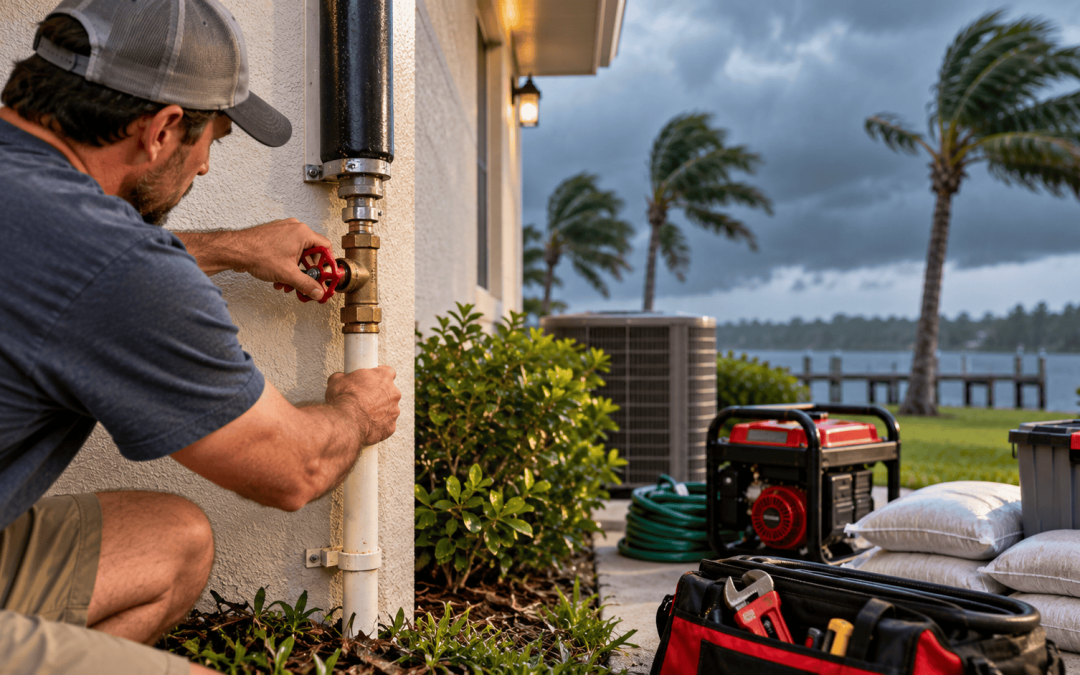
If you need to evacuate your home in Jacksonville or Orange Park, shutting off the main water valve is the best defense you can take against indoor flooding from storm-induced pipe bursts. The Florida Building Code requires full-open valves to be installed on the water service pipe near the curb, at the entrance of the water distribution supply pipe into the structure, and on the water supply to every water heater. Shutoff valves are also mandated on the supply line to each appliance or mechanical equipment. Knowing where those valves are, and confirming they actually work, is something every homeowner in this region should verify well before June. Do not wait.
- Locate the Main Shutoff: Find the main valve where the water line enters your home or near the street curb. In many Orange Park and Jacksonville homes, it sits inside a covered box near the front of the property.
- Isolate the Water Heater: Close the valve on the cold water supply line leading into your water heater. This protects the clean water stored inside your tank from getting contaminated if the public system loses pressure. Think of your water heater like a backup tank of fresh water, as long as you keep the bad stuff from flowing in.
- Turn Off Appliance Valves: Shut off individual valves for washing machines, ice makers, and toilets to prevent localized leaks from loose connections during high winds or structural movement.
- Test Your Valves: Turn each valve clockwise to confirm it closes completely. If a valve is stiff or won’t budge, do not force it: call a professional before storm season, not during it.
If you can’t locate your main water valve or it hasn’t been touched in years, that’s worth knowing now rather than at 11 p.m. during a mandatory evacuation order. Our team at Lance Maxwell is available around the clock to help you locate, test, or replace any valve in your system. Schedule a quick pre-season check with an emergency plumber in Orange Park and go into hurricane season with a clear head.
Protecting Your Home from Sewage Backups and Contamination
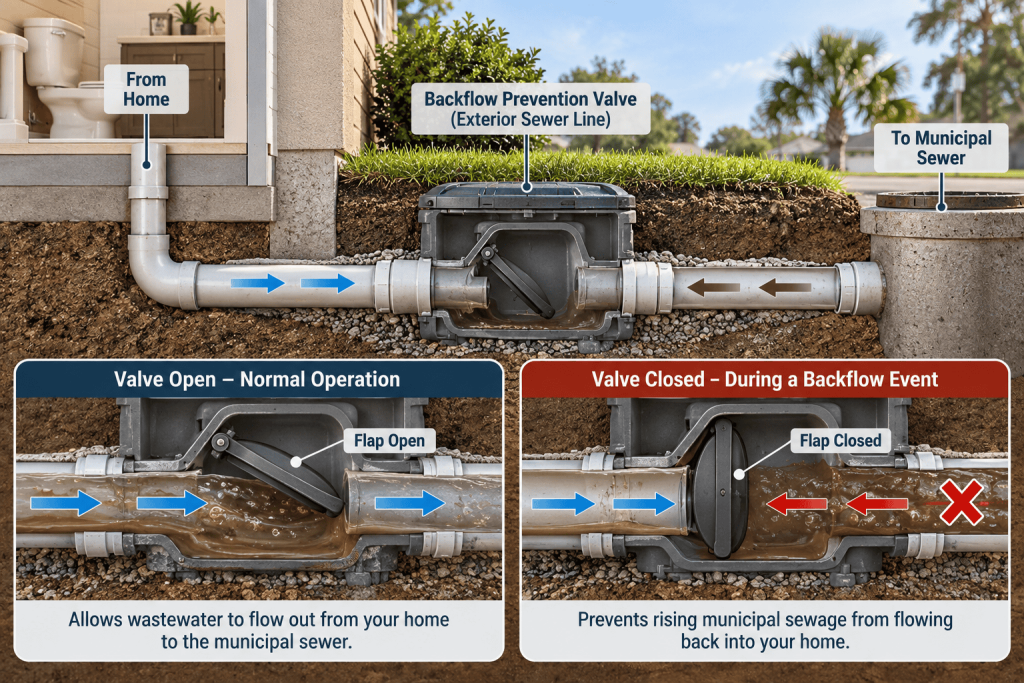
When heavy rains saturate the ground in low-lying neighborhoods like San Marco or along Black Creek in Clay County, municipal sewer systems can become overwhelmed in a matter of hours. This happens fast. The Florida Building Code mandates that potable water systems be designed and maintained to prevent nonpotable substances from entering the supply, and that safety standard extends to your drainage side as well. Ensuring your home has a functioning backflow control device is the most reliable way to stop rising municipal wastewater from reversing direction and flooding your drains, your floors, and everything on them.
Think of a backflow valve like a one-way gate: it lets your wastewater leave, but slams shut the second municipal sewage tries to force its way backward into your home. Power outages during major storms can disable municipal sewer lift stations across the region, creating conditions where raw sewage has nowhere to go but backward into residential lines. While the exact volume of raw sewage released during recent hurricanes is not precisely documented, the risk to low-lying homes is well-established by local health departments. Backflow valve maintenance is one of those tasks that gets deferred until there’s a problem, and by then, the problem is already inside your house.
Let our master plumbers inspect your sewer lines and test your backflow prevention systems before peak season arrives. Stay safe. Contact Lance Maxwell today to schedule a professional inspection and confirm your home’s defenses are fully operational before the first named storm of the year.
Private Well Safety and Post-Flood Recovery Protocols
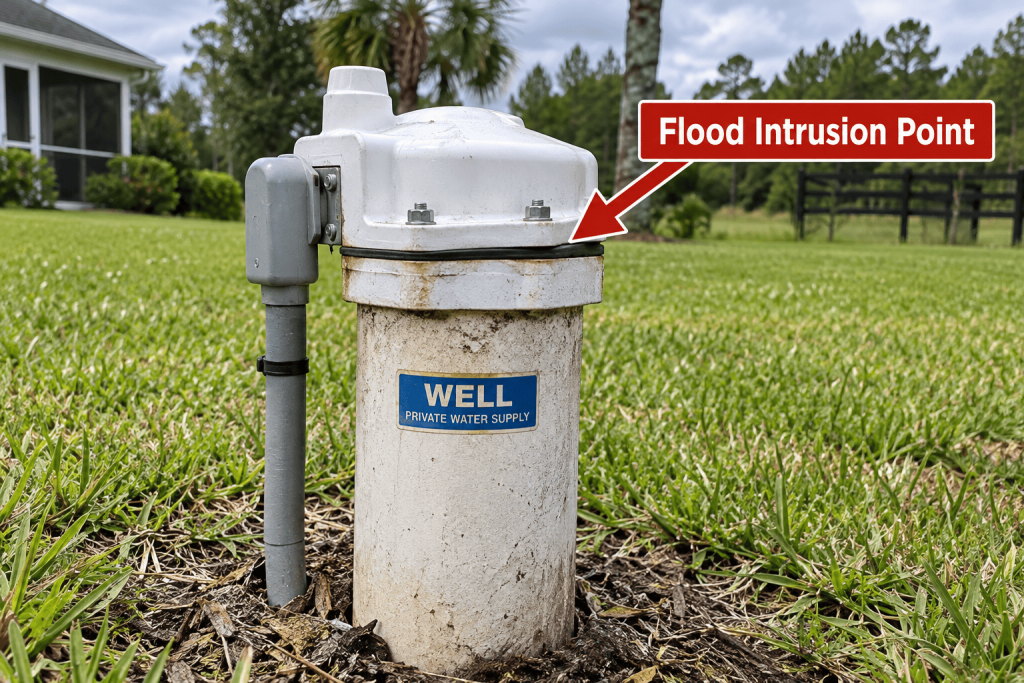
For neighbors relying on private wells in Middleburg or rural Clay County, a hurricane brings a unique set of water safety concerns that municipal customers don’t face. The Florida Building Code requires well pumps to be designed to maintain a prime and installed to allow ready access for repairs, but code compliance doesn’t protect a well head from submersion. If floodwaters reach your well casing, you have to assume that water is unsafe. Do not drink it. It can easily carry nasty bacteria that will make your family sick, which is why the Florida Department of Health in Duval County warns against using it until it’s treated.
After a flood, you must disinfect your well and have the water tested by a state-certified laboratory or your county health department before using it for drinking or cooking. In Duval County, homeowners can contact the Environmental Health Program at 904-253-1280 for sampling and bacterial testing instructions. In Clay County, Clay County Emergency Management coordinates public health preparedness and water safety monitoring to assist residents through the recovery process. Neither county’s health department will clear the water until testing confirms it, and that’s exactly how it should work.
“If your private well is covered by floodwaters during a storm, treat that water as contaminated. Do not drink it, bathe in it, or cook with it until it has been properly disinfected and cleared by a certified lab.” – (Local Public Health Guidance, source: Florida Department of Health in Duval County)
Frequently Asked Questions About Hurricane Plumbing Prep
How do I maintain my sump pump before hurricane season?
Sump pump maintenance is essential for keeping your basement or crawl space dry when the rain comes in sideways. Do not skip this. Ensure your pump is plugged into a functional outlet, test it by pouring a bucket of water into the pit to confirm it activates, and clear any debris from the inlet screen. For detailed, step-by-step instructions on keeping your system running smoothly, check out our sump pump maintenance tips.
What should I do if a boil water notice is issued for my neighborhood?
If a public water system loses pressure and a boil water notice is issued, boil all water used for drinking, cooking, brushing teeth, or washing dishes. Bring the water to a rolling boil for at least one minute. Alternatively, you can disinfect it by adding eight drops of unscented household bleach per gallon of water and letting it stand for 30 minutes, per Florida Department of Health in Duval County flooding guidance.
How do I protect my home’s gas lines during a hurricane?
If you use natural gas or propane for water heating or backup generators, keep outdoor gas meters and regulators clear of debris and protected from rising water. If you are evacuating and suspect gas line damage, shut off the main gas valve at the meter before you leave. If you detect a rotten egg odor at any point, leave the area immediately and contact your utility provider or emergency services: do not re-enter the structure until it has been cleared by a professional.
How can I tell if my sewer backflow valve is working properly?
A sewer backflow valve should be inspected at least once a year. Access the valve through its outdoor cleanout cap and visually confirm that the flap moves freely and is not obstructed by grease, tree roots, or debris. A flap that is stuck open or visibly damaged will not prevent sewage from reversing into your home when the municipal system is overwhelmed during a heavy storm.
How do I safely disinfect my private well after a flood?
To disinfect a flooded well, you’ll need to shock the system with unscented household bleach, flush the chlorinated water through all household taps until you smell chlorine, and let it sit in the pipes for 12 to 24 hours. After that, flush the system until the bleach smell is completely gone. Don’t drink a single drop until a certified lab or county health department gives you the green light.
Contact Us Today
Hurricane season in Northeast Florida is not a hypothetical. It is a reality. The St. Johns River floods, Black Creek rises, and neighborhoods from San Marco to Middleburg have seen what happens when a slow storm stalls over the region and the drainage systems can’t keep pace. Most of the worst plumbing outcomes, such as sewage backups, contaminated well water, or burst pipes from supply lines that were never shut off, are preventable with a few hours of preparation before the season peaks. There’s no clean formula for how much damage any given storm will cause, but there is a clear difference between homeowners who prepared and those who didn’t.
Lance Maxwell has been serving Orange Park, Jacksonville, Middleburg, Green Cove Springs, and Fleming Island since the ’90s. Day or night, we’ll be right over because storms don’t follow business hours, and neither do the problems they leave behind. Whether you need a backflow test, a sump pump inspection, or help tracking down a main shutoff valve that hasn’t moved in a decade, we’re ready to help before the clouds roll in.
Don’t wait for a storm cone to appear on the local news to secure your plumbing system. Give us a call or schedule your pre-season safety inspection online today. If you need a reliable plumber in San Marco or anywhere across Duval and Clay counties, we’ll be right over to handle the rest and give you true peace of mind.